
How to Follow Up After Submitting a Job Application
Read the employer's clock, use a legitimate contact, send one short message, and keep your wider search moving.

You submitted the application and received either an automated confirmation or silence. A follow-up can ask for a status or timeline, but it cannot guarantee a reply, move you ahead, or reveal what silence means. The practical decision is whether the employer's own process leaves room for one message, when that message makes sense, and which verified channel you are allowed to use.
Start with the evidence you already have: the saved job posting, the confirmation, the submission date, and any stated closing or response date. Then write one concise message with one question. Record the attempt and continue applying elsewhere. This keeps the follow-up proportionate to the information available.
First confirm that you are at the application stage
This guide covers one stage only: you applied and have not yet interviewed. If you completed an interview, use the timeline the interviewer gave you and follow the post-interview process. If you received an offer, rejection, withdrawal request, or document-verification instruction, answer that specific event instead. Mixing stages can make a normal application-status message sound as if the employer already promised an interview.
Open the posting and confirmation. Save the job title or requisition number, the date you submitted, the application channel, the status shown in the official portal, the closing date if present, any statement about rolling review, a promised response window, and a no-contact instruction. Do not infer a deadline from an old social post when the official posting says something different.
Use the employer's clock, not a universal day number
Career services publish different example waiting periods. Northwestern's 2025 guide distinguishes applications that have a fixed deadline from rolling review and calls the decision fact-specific. Santa Clara University's career center gives a different general example. Indeed gives another. Those differences are the reason not to turn one institution's number into a rule for every employer, country, role, or hiring system. Read the Northwestern guide, Santa Clara guidance, and Indeed article as examples, not a countdown.
Use one of four branches:
- A stated response date: wait through the date the employer named. If it passes without an update and contact is allowed, a brief message can ask whether the timeline changed.
- A fixed closing date: the review may begin only after applications close. Count from the employer's process, not only from the day you submitted. If the posting says shortlisted candidates alone will be contacted, treat that statement as part of the process.
- Rolling review or no date: allow reasonable review time in the context of the role, season, and employer. A single status question may be appropriate when you have a valid contact, but there is no universal day that makes it necessary.
- No-contact or no valid contact: do not bypass the instruction, guess a private email pattern, message unrelated employees, or turn a general switchboard into repeated calls. Record that follow-up is unavailable and keep the search moving.
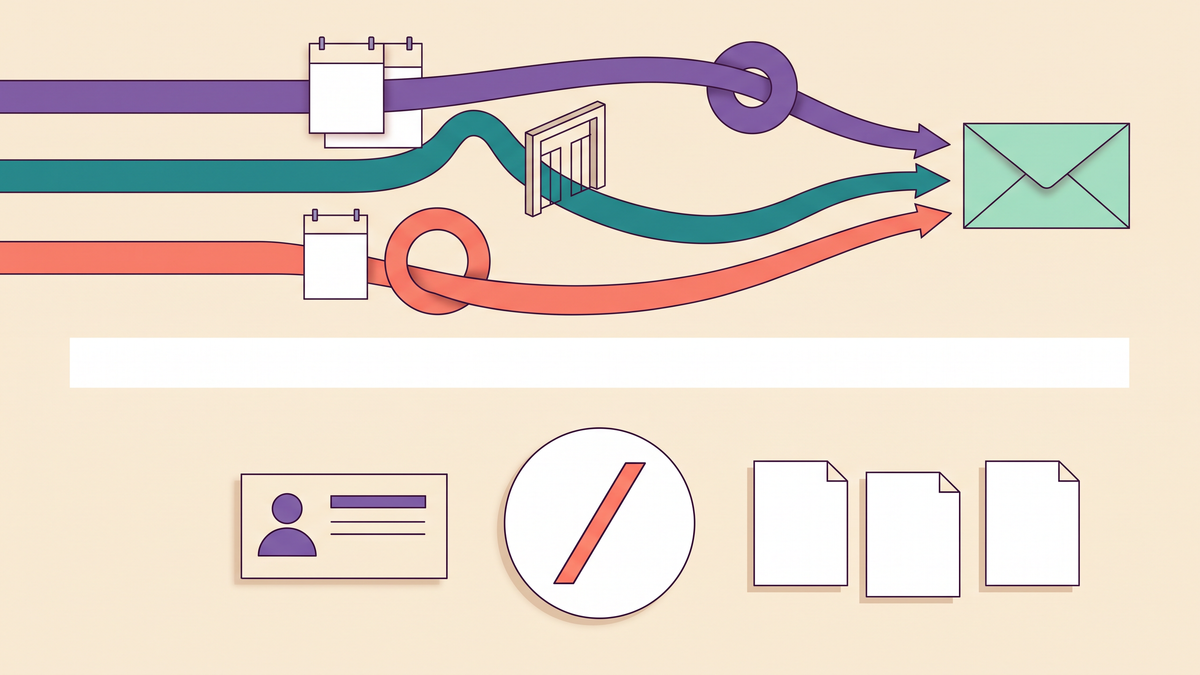
The employer's published process determines the branch. A generic waiting-period rule does not.
Use only a legitimate contact route
Prefer a contact named in the posting or confirmation, an official recruiter address, a reply-enabled confirmation thread, or a portal message option intended for applicants. Check the employer's careers site if the posting directs applicants there. Verify the spelling and domain before sending anything.
A public profile can help confirm a recruiter's role, but it does not automatically make a private-looking address or direct message appropriate. Do not guess addresses from employee naming patterns, ask strangers for an internal referral after applying, or bypass a portal designed to manage applications. If the only address is “do not reply,” it is not a hidden invitation to find another route.
Build the message in four parts
Your message needs only four pieces:
- Role and submission date: identify the exact position and when you applied.
- Continued interest: give one sincere sentence tied to the work, not flattery or pressure.
- One status or timeline question: ask whether there is an updated timeline or whether the application remains under review.
- Offer of additional information: make it easy for the recipient to request something relevant.
A clear subject can include the role and your name. The University of Georgia's application follow-up example identifies the role and offers further contact. Bayt's Arabic guide recommends a direct subject, a concise introduction, a relevant question, and a short professional message. See how to write to a recruiter. Adapt the structure to your facts rather than copying claims, years of experience, referrals, or employer praise that are not true.
Keep the email easy to answer. Do not attach the full application again unless the posting, recipient, or system makes that appropriate. Do not ask several questions about salary, interview dates, feedback, and hiring decisions in the same application-status note. One clear question is enough.
Example 1: a standard status question
Subject: Application follow-up: Data Analyst, Noor Hassan
Hello Ms Salma,
I submitted my application for the Data Analyst role on 12 March and remain interested in the opportunity to support the reporting team. Could you share whether the application is still under review or whether the hiring timeline has changed? I would be happy to provide any additional information that would be useful.
Kind regards,
Noor Hassan
The names, role, date, and team in this example are fictional. Replace them with verified details. If you do not know the recipient's name, use a neutral professional greeting rather than guessing a title or gender.
Example 2: the stated response date has passed
Subject: Timeline follow-up: Operations Coordinator application
Hello Recruitment Team,
I applied for the Operations Coordinator position on 4 April. The confirmation indicated that applicants would receive an update by 25 April, so I am writing to ask whether that timeline has changed. I remain interested in the role and can provide any additional material you need.
Best regards,
Omar Saleh
This message does not accuse the employer of delay. It points to the employer's own date and asks for an update.
Example 3: one truthful new accomplishment
Add an update only when it is new, relevant, and true: “Since submitting, I completed the accredited safety course listed as preferred in the posting, and I can provide the certificate if useful.” Northwestern notes that a relevant accomplishment after submission can be a reason to update an employer. Do not invent an offer, referral, deadline, award, or urgent competing process to provoke a response.
A complete version could read: “I submitted my application for the Site Coordinator role on 8 May and remain interested. Since then, I completed the accredited safety course listed as preferred in the posting. Could you share whether applications are still under review? I can provide the certificate or any other requested information.”
Example 4: there is no valid contact
There is no email template for this branch because the appropriate action is not to send one. Save the posting and confirmation, note “no applicant contact route” or the no-contact instruction, and continue. Do not guess an address, repeatedly call, or message several employees hoping one will forward your application.
Use a stop rule after one proportionate attempt
After sending one legitimate follow-up, record the date and channel. If the employer replies, follow the new instruction. If there is no reply, do not build a ladder of repeated emails, calls, direct messages, and escalations. Silence can reflect volume, internal delay, a paused role, a closed process, or many other causes. It is not reliable evidence of rejection, interest, or your quality as a candidate.
Continue the search rather than waiting on one employer. If you need a realistic application pace, build a quality-based application pipeline around roles you can evaluate and tailor for. If a confirmed rejection later arrives and feedback is allowed, use a separate guide to ask for useful feedback after rejection. Do not send that request while your application status is merely unknown.
Keep a simple application record
You can choose to organize the role in Tadween Job Profiles and track its stage on the application board. Keep “Applied” as the stage until a real employer event moves it to interview, offer, rejection, or another accurate state. Add the submission date, stated timeline, legitimate contact route, and your one follow-up attempt to your own record where appropriate.
Tadween does not send the email, contact the recruiter, guarantee reminders, predict the outcome, or verify an employer's private process. Stage tracking helps you keep your own search coherent. The decision to contact an employer still comes from the posting, confirmation, and verified channel.
Run a final check before sending
- Is this still the submitted-application stage?
- Did you read the posting, confirmation, closing date, and contact instruction?
- Is the recipient a legitimate applicant contact?
- Does the message name the role and submission date accurately?
- Does it ask one status or timeline question?
- Is every accomplishment or constraint true?
- Will you record this attempt and continue applying after it?
The useful outcome is not a perfect line that forces a reply. It is a proportionate decision based on the employer's process, one message that is easy to understand, and a job search that does not stop while you wait.
Track each application by its real stage
Organize the role, submission date, stated timeline, and one follow-up attempt without confusing silence with an outcome.