
How to Update Your Resume for 2026: What Changed and What Stays
A practical section-by-section refresh guide for professionals with resumes that are two to five years old.
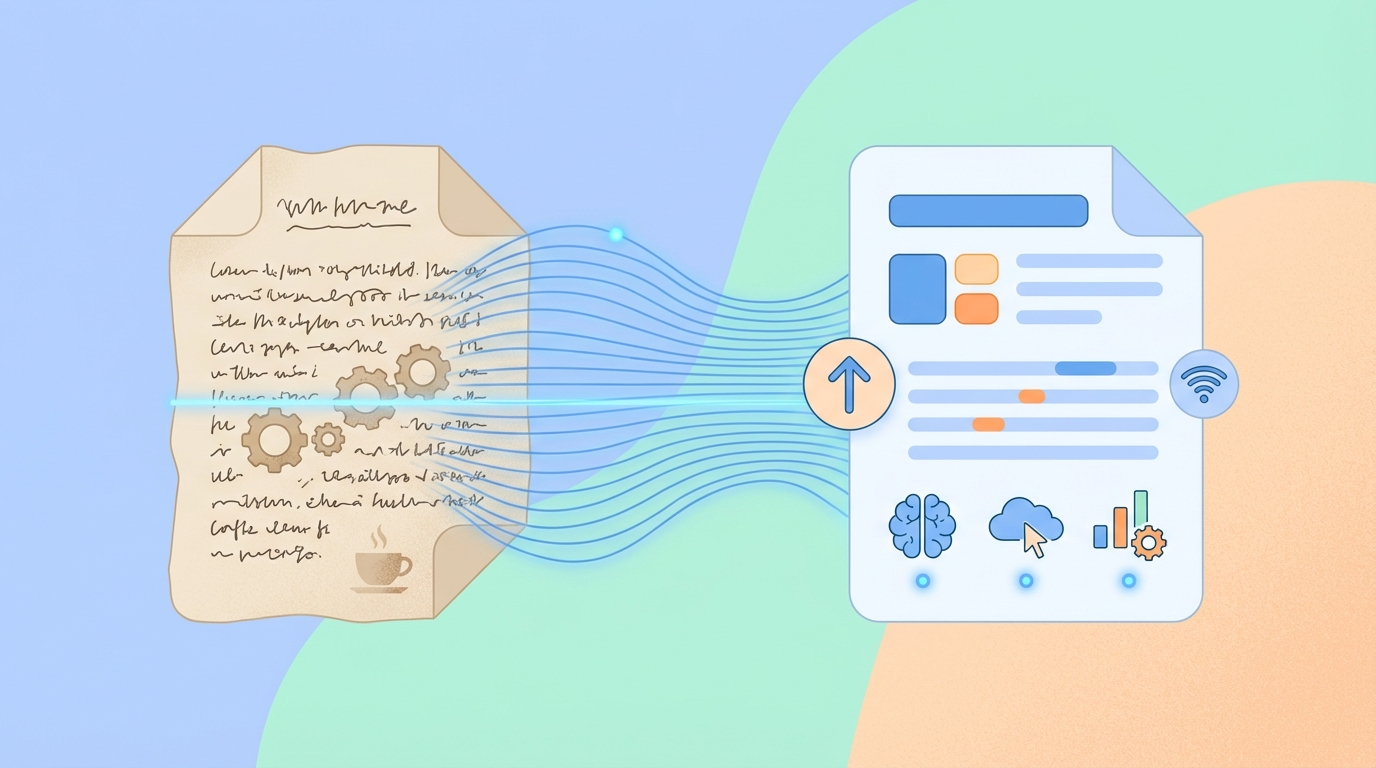
Your 2023 Resume Is Not Broken, But It Is Probably Out of Date
Most resume advice online treats every year like a revolution. It is not. Hiring managers still want evidence that you can do the job. They still scan quickly. They still care more about clarity than decoration. But between 2023 and 2026, a few meaningful things did change: AI screening became more common, skills-based hiring got sharper, remote and hybrid work stopped being a novelty, and employers started expecting a clearer signal of tool fluency, especially around AI.
That means the right question is not, “Do I need a completely new resume?” The right question is, “What should I update so my resume reflects how companies evaluate talent now?” For most professionals, the answer is a focused refresh, not a total rewrite.
This guide walks section by section through what changed, what stayed the same, what to remove, and how to modernize your resume in one sitting without turning it into a trend-chasing mess.
A modern resume in 2026 is still a credibility document first. The goal is not to look futuristic. The goal is to make your relevance obvious, fast.
What Actually Changed Since 2023
The biggest shift is not visual. It is evaluative. More companies now use software that goes beyond basic keyword matching. Some systems still behave like old ATS parsers, but many now score resumes using context, role fit, skill patterns, and phrasing that suggests outcome rather than task ownership. You do not need to “write for robots,” but you do need to write clearly enough that both a machine and a human can understand the same story.
Another shift is the rise of skills-based hiring. Employers are less impressed by title inflation alone and more interested in what you can actually do. A product manager who can show experimentation, stakeholder alignment, and measurable launches is stronger than one with an impressive title and vague bullets. A marketer who shows channel fluency, reporting discipline, and revenue impact wins over one who says “responsible for campaigns.”
Remote work also changed how professionals present themselves. Location is still relevant, but the way you describe distributed collaboration, async communication, and cross-time-zone execution now matters. In many roles, that is no longer a bonus signal. It is baseline competence.
And then there is AI. Employers do not expect everyone to be an AI engineer. They do expect many professionals to understand where AI fits into their workflow. If you use AI tools to speed up research, automate repetitive drafts, improve analysis, or support localization, that is now legitimate professional context, not a weird side note.
What Stayed the Same, Thankfully
Strong resumes still do four things well. They make your target role legible. They prove impact with specifics. They remove friction for the reader. And they avoid unnecessary noise.
You still need a clean hierarchy, readable spacing, sensible section order, and bullets that emphasize outcomes over duties. You still should not bury the best part of your background in paragraph six. You still should not use design tricks that make the document harder to parse. And you still should not confuse self-expression with clarity.
That last point matters because some people react to changing hiring norms by over-correcting. They add more color, more icons, more charts, more “personal brand” language, and more vague buzzwords. Usually that makes the resume worse. Better structure beats louder structure.
Start With the Header: Remove What No Longer Helps
Your header should identify you, tell the reader how to reach you, and support your candidacy. That is all. In 2026, a full street address is still unnecessary for most roles. City and country are enough, sometimes even just city. If you are open to relocation or remote roles, state that clearly instead of making recruiters guess.
A strong modern header usually includes your name, phone number, professional email, LinkedIn, and optionally a portfolio or public profile link. If you are applying across Arabic and English markets, a bilingual portfolio or profile can be useful because it shows both accessibility and intent. If you have a Tadween public page or tailored job profile, this is a good place to include it.
What should leave the header? “References available upon request” should be gone. So should unnecessary personal details for markets that do not expect them. For US, UK, and much of Europe, that means no date of birth, marital status, or photo. In Gulf and MENA contexts, expectations can differ, which is exactly why maintaining market-specific versions is smarter than forcing one universal document to do everything. If you need help with that, this international CV format guide gives you the market-by-market logic.
The Professional Summary: Less Objective, More Positioning
If your resume still opens with an objective statement, update that first. “Seeking a challenging role where I can grow my skills” does not help anyone in 2026. It did not really help in 2023 either.
A modern summary is a positioning layer. It should quickly answer three things: who you are professionally, where your experience is strongest, and what kind of impact or specialization you bring. Two to four lines is usually enough. Think of it as the headline plus thesis statement for the rest of the resume.
For example, a weak old summary might say: “Experienced operations professional seeking a role in a growth-oriented company.” A stronger 2026 version would say: “Operations manager with 8 years of experience scaling fulfillment and customer support workflows across e-commerce and SaaS teams, known for reducing ticket backlog by 42% and improving SLA adherence in distributed environments.”
That is the pattern. Role, depth, domain, evidence. If you need a deeper walkthrough, read our professional summary guide.
Your Experience Section Needs Better Evidence, Not More Words
This is where the real update happens. A lot of resumes from 2023 and earlier still describe work as duty lists. In 2026, that reads flat because employers are trying to infer leverage, not attendance. They want to know what changed because you were there.
Take a hard look at every bullet under your last three roles. Ask yourself: does this line describe a responsibility, or does it prove value? “Managed social media accounts” is a task. “Built a content cadence across LinkedIn and Instagram that increased qualified inbound leads by 27% over two quarters” is evidence. “Worked with cross-functional teams” is generic. “Coordinated launch timelines across product, design, and sales for six releases in one year” tells a reader much more.
You do not need every bullet to have a big metric. That becomes fake fast. But you do need enough specificity that the reader can understand scope, complexity, and result. Good bullets often include one or more of the following: scale, speed, revenue, cost, quality, retention, adoption, efficiency, compliance, or strategic ownership.
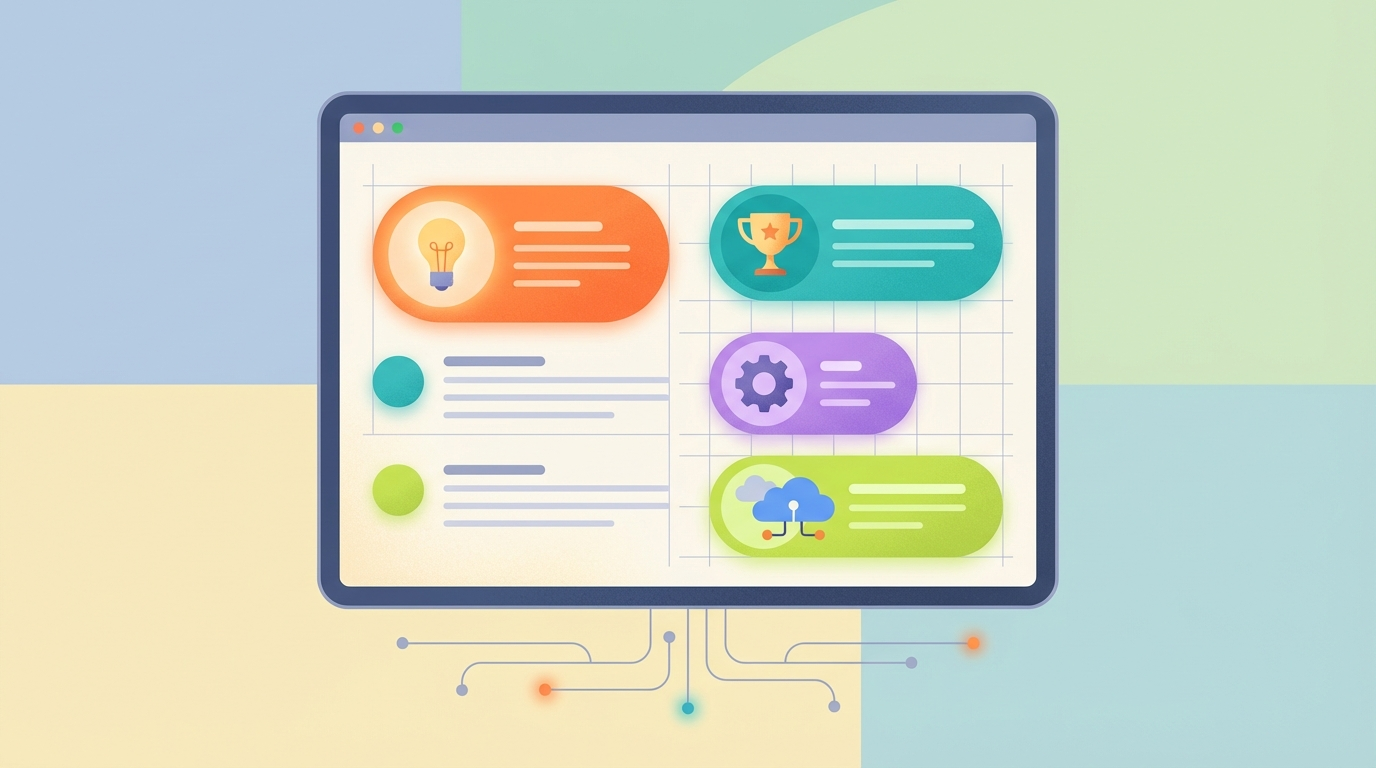
A clean, ATS-friendly structure matters more than visual flair when you update an older resume.
Also pay attention to language inflation. In older resumes, people often used words like “led” or “owned” for work that was actually collaborative support. In 2026 that can backfire because hiring teams are comparing your wording against interview depth. Be precise. Strong does not have to mean exaggerated.
Skills Sections Changed, But Not in the Way Most People Think
A 2023 skills section was often a keyword dump. In 2026, that is less effective unless the list is curated and credible. A stronger skills section groups related capabilities and reflects the actual role you are targeting.
Instead of a giant wall of tools and buzzwords, organize skills by category where appropriate: product analytics, lifecycle marketing, CRM systems, frontend technologies, cloud tools, languages, or research methods. This helps both scanners and humans. It also forces you to decide what belongs and what is stale.
If AI skills are relevant to your field, include them honestly. That might mean listing prompt design, AI-assisted research, workflow automation, LLM evaluation, AI localization, or policy-aware content review. But do not put “AI” on the page as a decorative badge. Tie it to actual work, either in the skills section or, better, inside experience bullets where it has context. If that is your focus, our AI skills guide can help once it is published.
One more thing: outdated tools quietly weaken credibility. If a skill has not been relevant to your target jobs in years, remove it. Resume space is not free. Every old tool you keep pushes a stronger current signal lower on the page.
Remote and Hybrid Work Deserve Explicit Treatment
Many professionals gained meaningful remote experience after 2020 but still treat it as invisible background context. In 2026, that is a miss. If your work involved async collaboration, documentation-heavy processes, global stakeholders, or independent execution across time zones, say so where relevant.
This is especially useful for operations, product, engineering, customer success, design, recruiting, and content roles. It helps employers understand that you can function without constant in-person coordination. You are not just saying you worked from home. You are signaling that you know how to deliver in distributed systems.
Useful phrasing includes things like “partnered with teams across CET and Gulf time zones,” “ran weekly async reporting for cross-functional stakeholders,” or “built onboarding documentation that reduced ramp time for remote hires.” These are concrete behaviors, not generic remote-work claims.
Design Trends in 2026: Cleaner, Simpler, More ATS-Aware
Design did not become irrelevant. It just became more restrained. Most professionals are better off with a resume that feels polished and calm rather than “creative.” That means fewer columns, fewer graphic flourishes, fewer visual meters, and fewer text areas hidden inside design elements that parsers may mishandle.
For many industries, the safest format is still a single-column or lightly structured layout with clear headings and generous spacing. If you are in a design-forward field, you may use more visual styling, but even then your application resume should remain parseable and easy to skim.
If your old resume has tables, text boxes, unusual icons in section headings, or a heavily decorative sidebar, it is worth simplifying. The point is not to be boring. The point is to remove friction.
The best modern resume design decision is the one the reader never notices, because everything feels easy to read on the first pass.
A Quick Section-by-Section Audit You Can Do Tonight
- Header: remove full address and outdated filler, add relevant profile links.
- Summary: replace objectives with a sharper positioning statement.
- Experience: rewrite weak duty bullets into outcome-oriented evidence.
- Skills: reduce clutter, group capabilities, remove stale tools.
- Education and certifications: keep what is relevant, trim older low-signal details.
- Formatting: simplify columns, reduce decorative noise, preserve hierarchy.
- Role targeting: make sure the first half of the resume clearly matches the job you want now.
If you only do those seven things, your resume will already feel far more current than most of the applicant pool.
How AI Can Help Without Making Your Resume Sound Fake
The useful role of AI is not pressing a button and accepting whatever appears. The useful role is speed plus perspective. AI is good at rewriting clunky bullets, spotting repetition, suggesting stronger summary language, and helping you create multiple tailored versions of the same core resume.
That matters more in 2026 because more professionals are applying across adjacent roles, not just one. A marketing strategist might need one version aimed at growth, another at lifecycle, and a third at content leadership. A multi-career professional may need separate profiles entirely. This is where tools like Tadween are genuinely helpful, because they let you maintain multiple role-specific profiles built from the same career history instead of manually breaking and rebuilding the same document every week.
Use AI to draft, sharpen, and adapt. Do not use it to invent accomplishments. If a bullet sounds more impressive than what you can explain in an interview, it is a liability, not an upgrade.
The Goal Is a Current Resume, Not a Trendy One
A strong 2026 resume is not about chasing every new hiring trend. It is about removing outdated habits and making your current value easier to see. The best update usually comes from subtraction and sharper proof, not from adding more sections.
If your resume is two to five years old, you probably do not need to start from zero. You need to modernize your framing, tighten your evidence, reflect current tools and workflows, and make sure the document matches how employers actually evaluate candidates today.
That is a one-evening project if you approach it methodically. And if you want help generating updated role-specific versions from your existing experience, Tadween can help you build them faster, without losing the thread of your real career story.
Refresh your resume without starting from zero
Use Tadween to generate role-specific resume versions, update older bullets, and keep multiple career profiles ready for different applications.