
How to prepare for a job interview without memorizing answers
Scripted answers break the moment an interviewer asks something slightly different. Prepare material instead of sentences and you can answer questions you never rehearsed.

Ask ten people how they prepared for their last interview and most will describe the same routine. They found a list of common questions, wrote an answer under each one, and read those answers until they stuck. It feels productive because it produces something visible. It also produces the failure most candidates recognise afterwards, when the interviewer asked something adjacent to the prepared question and the prepared answer came out anyway, slightly off target and noticeably rehearsed.
There is a different way to prepare that takes about the same amount of time and survives contact with a real conversation. Instead of preparing answers, you prepare material: a small set of things you have actually done, organised so that you can reach for the right one and shape it to whatever you are asked.
What memorising actually costs you
Recall and listening compete for the same attention. When part of your mind is retrieving a stored paragraph, the part that should be tracking what the interviewer is really asking gets thinner. That is why scripted answers so often address a question's surface and miss its intent. Someone who asks how you handled a disagreement with a manager is usually probing how you deal with authority, evidence, and repair. A rehearsed conflict story delivered word for word covers the topic without touching any of that.
A script is also brittle in a way that shows. Interviewers hear dozens of candidates and develop a reliable ear for delivery that has been smoothed by repetition: the fluent opening, the too neat structure, then the sudden loss of fluency when a follow up question steps outside the rehearsed boundary. That last moment is where the damage happens. Follow up questions are where credibility is confirmed or lost, and a memorised answer has no second layer to draw on.
The deeper problem is that a script sets the wrong goal. It turns the interview into a test of accuracy, so any deviation feels like a mistake and your anxiety rises in the middle of your own answer. Preparing material instead of sentences turns it back into a conversation you are equipped for, which is both more accurate and considerably calmer.
Research the role, not just the company
Most candidates research the company and stop there: founding year, product lines, recent funding, a value statement they can quote back. That research is easy to do and yields very little you can use, because it says nothing about the specific problem this role exists to solve.
Start with the job posting and read it as evidence rather than as a wish list. Which responsibilities are described in detail, and which get one line? The detailed ones are usually the real work. Which requirements appear twice in different words? Repetition signals what has been painful for them. Does the posting describe building something new, cleaning up something that already exists, or holding something steady? Those three situations reward completely different examples from you.
Then extend it. Look at how the team's work shows up in public: the product itself, release notes, engineering or design writing, talks, the phrasing of other open roles on the same team. Look at the people you are likely to meet and note what they were doing before. A team of recent joiners from much larger companies is often being asked to add process. A team that has been together for years is often being asked to change something they built themselves.
Write two or three sentences describing why you think the role is open and what would make someone successful in it during the first six months. You may be wrong, and that matters less than you would expect. Having a specific hypothesis changes what you notice during the conversation and gives you something worth checking with the interviewer, which is far more useful than reciting a mission statement back to the person who wrote it.
Build an evidence bank instead of an answer bank
This is the part that replaces memorisation. An evidence bank is a short written collection of things you have actually done. Six to ten entries is enough, each recorded in a compact form you can hold in your head.
For each entry note four things: the situation, what you specifically did, the result, and what you learned or would do differently. A few lines each. The point is not to draft a polished paragraph. It is to fix the facts, so that under pressure you are only choosing and shaping, never inventing.
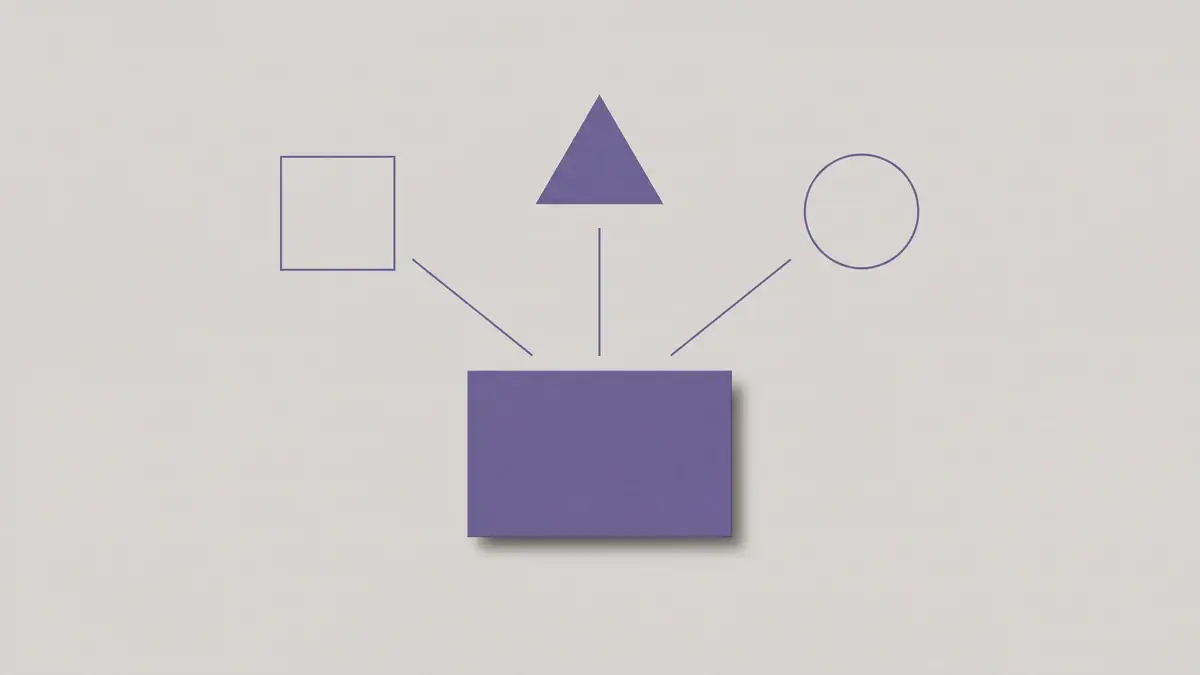
One entry can answer several unrelated questions once the facts are separated from the framing.
Choose entries for range rather than for how impressive they sound. A useful bank usually holds a project you delivered from start to finish, a situation you handled badly and later repaired, a time you persuaded someone without having authority over them, a moment of real technical or analytical depth, a time you worked inside a hard constraint such as no budget or no data, and something you learned recently on your own initiative. Range matters because interviews sample widely, and three variations of your best project cannot cover six different questions.
Be exact about numbers and honest about your own part. Say what you did and what the team did, because the interviewer will ask, and an example that quietly inflates your contribution collapses after two follow ups. If you do not know a figure, describe the effect in terms you can defend. A review that used to take a week now finishes in a day. Complaints about the same issue stopped arriving.
If you already have a Tadween job profile, most of this material is written down. The experience, projects, and skills you entered while building the profile are the raw entries for your bank, and reading them back is a faster way to remember what you have done than starting from an empty page.
How to adapt one entry to three different questions
Once the facts are fixed, answering becomes a matter of framing. Take a single entry. You inherited a monthly reporting process that took a week, found that most of the delay came from manual reconciliation, rebuilt that step, and brought the cycle down to a day. Now watch three unrelated questions pull three different things out of the same event.
Asked to describe a time you improved a process, you lead with the diagnosis: how you established where the week was actually going before changing anything. Asked about a time you disagreed with a colleague, you lead with the person who owned the manual step and did not want it touched, what their concern really was, and how you tested it instead of arguing with it. Asked what you would do first in this new role, you lead with the transferable method: measure where the time goes, change the largest single cause, then verify that the change held.
That is the whole skill. Same facts, different entry point, different emphasis, honest every time. It cannot be memorised, because it depends on a question you have not heard yet. It does not need to be, because you already know the facts.
Practising this out loud matters more than reading it. The gap between knowing an example and telling it in ninety seconds is real, and it only closes through repetition against actual questions. Tadween's mock interviews are built for that: a spoken conversation attached to one of your job profiles, in English or Arabic, with a behavioural or technical focus, ending in a structured coaching report drawn from the profile you built. Sessions use credits, so spend them on the framings you find hardest rather than on warming up.
The four kinds of questions you will actually get
Behavioural questions
Anything that begins with tell me about a time. These ask for evidence of a pattern, so keep the situation short, spend most of the answer on what you did and why you chose it, and finish on the result plus what it taught you. Around ninety seconds, then stop. Silence after a complete answer is not yours to fill.
Competency and technical questions
These test whether your knowledge holds up under examination. Think out loud, name your assumptions, and say what you would check. If you do not know something, say so and then say how you would find out. That is a genuinely good answer, and much stronger than a confident guess that unravels on the next question.
Motivation questions
Why this role, why this company, why now, why leave. These look for a coherent story rather than enthusiasm. Connect what you want to do next to what the role actually involves, using the hypothesis you formed while researching it. Vague admiration is forgettable and slightly suspicious.
The uncomfortable ones
Gaps, short tenures, being let go, salary. Prepare a plain sentence for each rather than a defence. A gap becomes: I took eight months out for a family situation, I used part of that time to finish a data course, and I have been at full availability since March. State it, add what is true and useful, then move on. Length signals discomfort, so brevity is doing real work here. For salary, decide the range you will accept and the reasoning behind it before you are asked, and remember that asking what range they have budgeted is a normal question, not an aggressive one.
Prepare questions only you could ask
Generic questions about culture and growth tell the interviewer nothing about you. Questions built from your research do, because they show you have already thought about the work.
Use your hypothesis. I noticed documentation comes up twice in the posting, is that a gap you are trying to close or something the team already does well? Ask what success looks like at six months, what the person who held the role before found hardest, and how decisions get made when the team disagrees. Bring four or five and expect two of them to be answered before you get the chance. Ask what happens next and when, because leaving without knowing the timeline buys you a week of unnecessary uncertainty.
The day of the interview
Do not reread your notes on the way in. Late review pulls you back toward reciting, which is the habit your preparation was designed to avoid. Read the bank once the evening before, then close it.
Handle the logistics so they cost you nothing. Know the route, or test the link, camera, and microphone an hour ahead. Have water and one page with your questions and the interviewer's name on it. Arrive early enough to sit still for five minutes before you start.
During the conversation, let yourself pause. Two seconds of silence before answering reads as consideration rather than hesitation, and that pause is exactly where you choose which entry fits. If a question is ambiguous, ask which part they want you to focus on. If you realise halfway through that you picked the wrong example, say so and switch. Interviewers respond well to that, because it shows them what working with you would be like.
The twenty four hours afterwards
Write down what you were asked while you still remember the wording, especially anything you fumbled. That list is worth more than any question bank you can find online, because it comes from the interviews you are actually having and it tells you which entries to add or sharpen.
Send a short thank you note the same day. One line of appreciation, one specific thing from the conversation, one sentence adding whatever you wish you had said. Three sentences is enough.
Then let it go. You cannot influence the outcome any further, and the useful next step is applying the same preparation to the next conversation. That is the quiet advantage of an evidence bank over a set of scripts. It survives every interview and improves each time, while a script only ever fits the one question it was written for.
If you want somewhere to keep this material, a Tadween job profile holds your experience, projects, and skills in one structured place, and you can practise against it whenever an interview is scheduled. Create a free account and build the profile once, or see how credits work before you start.
Common questions about interview preparation
How long should I spend preparing for one interview?
Two to three focused hours is usually enough once you have an evidence bank. Roughly an hour on the role and the team, an hour writing or updating six to ten entries, and thirty minutes saying the harder ones out loud. After the first interview the bank is reusable, so later preparation is mostly research plus rehearsing the framings that gave you trouble.
Is it wrong to use a framework like situation, action, result?
No. A framework is a shape for organising an answer while you speak, which is different from memorising the words. Keep the structure and let the sentences come out differently each time. Problems only start when the structure becomes a script you refuse to leave.
What if I am asked about experience I genuinely do not have?
Say that directly, then offer the nearest real thing you have done and explain how you would approach the gap. Interviewers are usually testing whether you can reason about unfamiliar work, and an honest adjacent example with a clear method beats an invented one that falls apart under follow up questions.
Does practising with an AI mock interview actually help?
It helps with the part that reading cannot fix: hearing yourself choose an example and deliver it in about ninety seconds. Tadween's mock interviews run as a spoken conversation tied to one of your job profiles and end with a structured coaching report, which makes it easier to see which entries need sharpening before you sit with a person.
Keep your evidence in one place
A Tadween job profile holds your experience, projects, and skills in a structured form, and you can rehearse against it with a spoken mock interview before the real conversation.