
13 Signs Your Interview Went Well (And 5 Red Flags It Didn't)
Post-interview anxiety is universal. Instead of replaying every moment, learn which signals actually matter, which ones mean nothing, and what to do while you wait.
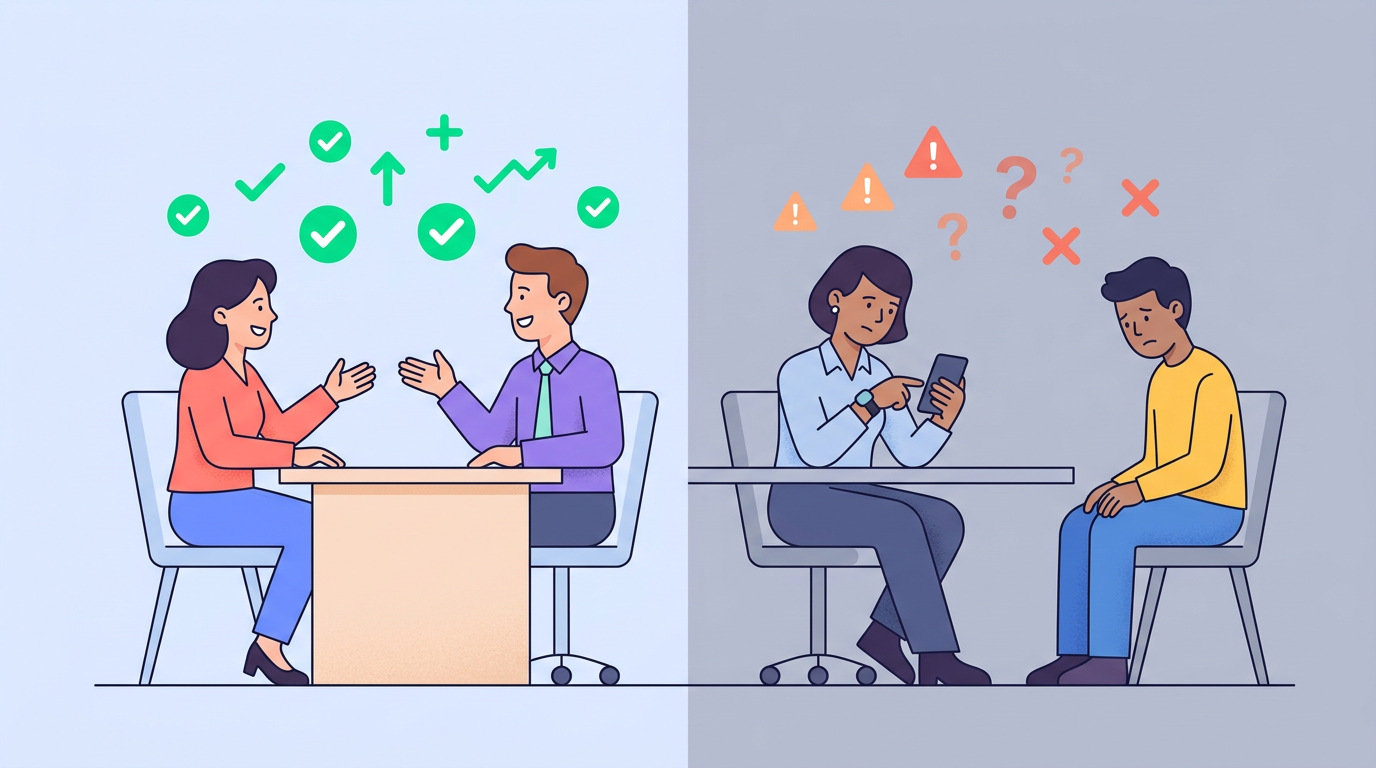
You Just Walked Out. Now the Real Interview Begins.
The interview ended. You said your goodbyes, walked to the elevator, and the analysis started before the doors closed. Did they smile because they liked you, or because they're polite? Why did the hiring manager mention the team offsite in October? Was that a signal? And what did "We'll be in touch" actually mean?
You're not alone in this spiral. Post-interview anxiety is nearly universal, and it's driven by a frustrating reality: interviews give you very little reliable feedback about where you actually stand. But some signals carry more weight than others. Here's what to look for, what to ignore, and what to actually do while you wait.
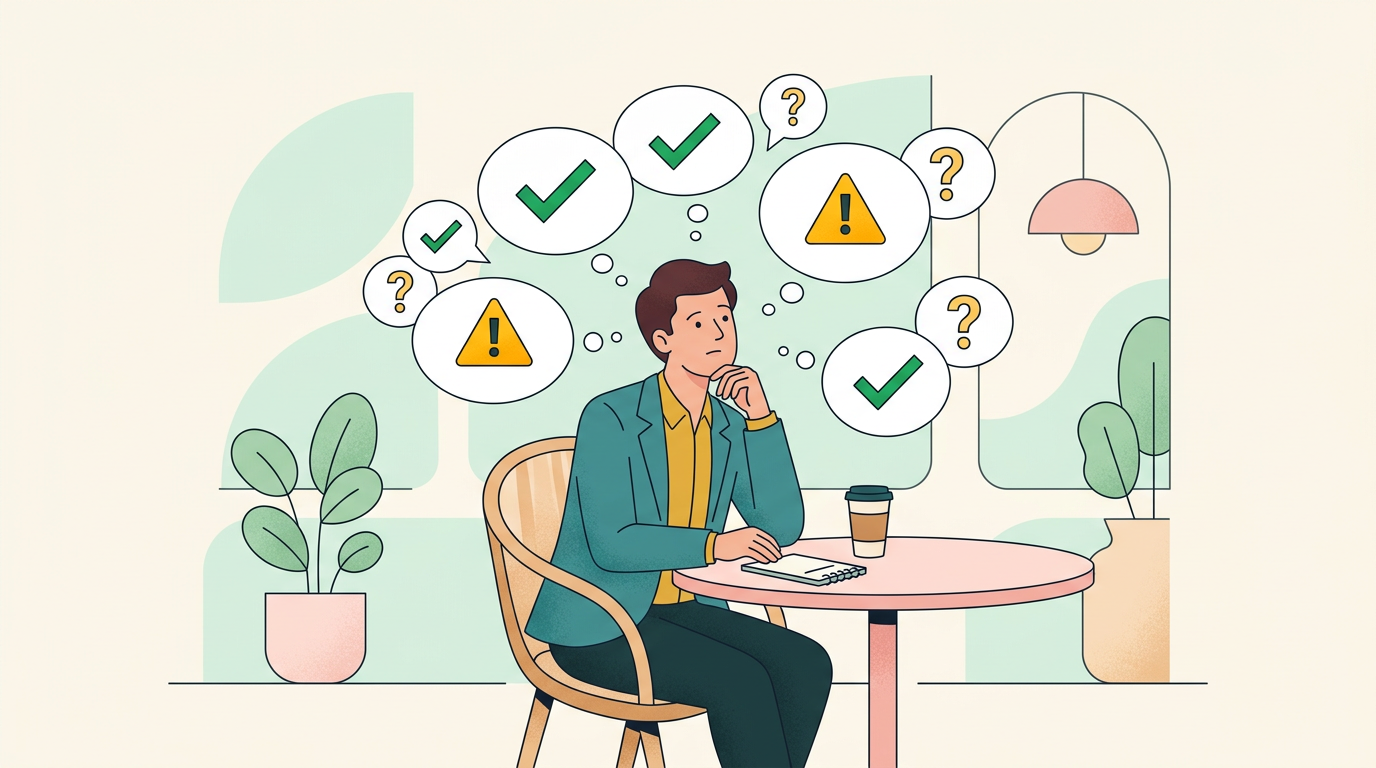
The post-interview spiral: every word, every pause, every facial expression gets dissected. Sound familiar?
13 Signs Your Interview Likely Went Well
No single signal guarantees an offer. But when several of these cluster together, they paint a stronger picture than any one alone.
1. The interview ran long
A 30-minute slot that turns into 50 minutes is one of the strongest positive indicators. Hiring managers have packed calendars. They don't extend conversations they want to end. If the interviewer kept going past the scheduled time, they were genuinely engaged with what you were saying.
2. The interviewer discussed next steps in detail
"We'll have you back for a second round next Thursday" is meaningfully different from "We'll be in touch." When an interviewer walks you through what happens next, including timelines, who you'd meet, or what the process looks like, they're mentally moving you forward in the pipeline.
3. You were introduced to team members
Meeting potential colleagues, especially when it wasn't on the agenda, is a strong signal. The interviewer wanted to gauge team fit and was confident enough in you to make introductions. Nobody brings a candidate they plan to reject on a tour of the office.
4. They asked about your availability and start date
Questions about when you can start or whether you have competing offers are logistical, not hypothetical. Interviewers don't ask about start dates for candidates they plan to pass on.
5. The interviewer sold the company to you
When the conversation shifts from evaluating you to convincing you, something has changed. If the interviewer started describing perks, growth opportunities, team culture, or why they personally love working there, they're recruiting. That's a good sign.
6. They engaged deeply with your answers
Follow-up questions that build on your responses, rather than just moving to the next item on a list, indicate genuine interest. "Tell me more about that" or "How did you handle the pushback?" shows the interviewer is invested in understanding your experience, not just checking boxes.
7. The conversation felt natural
When the interview shifts from a formal Q&A to a genuine two-way discussion, it typically means the interviewer is comfortable with your candidacy. They've moved past evaluation and into exploration. This doesn't happen with every candidate.
8. They mentioned specific projects you'd work on
"You'd be leading the migration project" or "This team is building the new analytics dashboard" is different from a generic role description. When the interviewer imagines you in specific situations, they're testing whether you fit the real work, not just the job posting.
9. You got culture and work-style questions
Questions about how you handle conflict, your preferred management style, or what motivates you tend to come after the interviewer has already assessed your technical competence. These questions are about whether they want to work with you, not whether you can do the job.
10. The interviewer shared challenges honestly
When an interviewer opens up about team challenges, scaling pains, or organizational growing pains, they're treating you as a potential insider. You don't share real problems with someone you plan to reject.
11. Body language was open and engaged
Leaning in, nodding, consistent note-taking, steady eye contact. These aren't foolproof on their own, but combined with other signals on this list, they reinforce that the interviewer was present and interested rather than going through the motions.
12. They asked about salary expectations
Compensation discussions rarely happen with candidates who won't receive an offer. If the interviewer brought up salary range, benefits, or total compensation, they're assessing whether a deal is financially feasible. That's a late-stage conversation.
13. The interview ended with genuine warmth
Being walked to the elevator rather than pointed toward the exit. A "It was really great meeting you" with actual enthusiasm. These small courtesies that go beyond the minimum suggest positive sentiment. On its own, warmth means little. But paired with several other signals above, it's the finishing touch.
The strongest indicator isn't any single signal. It's the combination. Three or four of these together are far more meaningful than any one alone.
Signals People Misread
Some signals feel meaningful but carry almost no predictive value. Stop over-analyzing these:
"We'll be in touch." This is a closing script, not a promise. Nearly every interviewer says it, regardless of outcome. It means "this conversation is over," nothing more.
The interviewer was friendly and laughed at your jokes. Professional interviewers are warm with every candidate. Friendliness is part of representing the company well. Don't confuse courtesy with commitment.
The interview started on time. This just means they're organized.
You were offered water or coffee. Standard hospitality. Every candidate gets offered a drink.
They described the role in detail. Explaining the position is part of every interview. They describe the role to everyone, not just the candidates they like.
The interviewer mentioned company benefits. Many companies train interviewers to include a benefits overview in every session. This is process, not preference.
The key distinction: positive signals are behaviors the interviewer didn't have to do. Neutral signals are things they do with every candidate as part of the standard process.
5 Red Flags the Interview Didn't Go Well
Bad signs tend to be more reliable than good ones. Rejection signals are usually structural, not interpersonal.
1. The interview was unusually short
If a 45-minute interview wraps up in 12 minutes with no follow-up questions, the interviewer likely made an early decision. Short interviews occasionally happen due to scheduling issues, but if the interviewer didn't attempt to fill the time, that's telling.
2. No questions about your experience
When the interviewer doesn't probe your background, past projects, or specific skills, they may have already determined a mismatch. A genuine evaluation requires understanding what you've done. If they didn't ask, they weren't evaluating.
3. The interviewer seemed distracted
Checking their phone, glancing at the clock, giving vague one-word responses to your questions. If the interviewer wasn't engaged, they weren't taking your candidacy seriously.
4. No discussion of next steps
Ending the interview with no mention of timeline, process, or what comes next often signals the company won't be moving forward. Compare this to the detailed next-steps conversations that accompany strong interviews.
5. They didn't try to sell you on the role
If the interviewer made no effort to make the position or company sound appealing, they may not be concerned about winning you over. When a company wants you, they compete for your attention. Silence on that front speaks volumes.
The Part Most Career Articles Won't Tell You
Here's the honest truth: you usually cannot tell how an interview went. Interviewers are trained to maintain consistent behavior across all candidates. A warm, engaging interview might end in rejection because another candidate had more relevant domain experience. A terse, clinical interview might result in an offer because the team valued your technical depth over conversational chemistry.
The signals above are patterns, not promises. They improve your read on the situation, but they don't predict outcomes with any certainty. Hiring decisions involve factors you'll never see: internal politics, budget changes, another candidate's referral from the CEO's college roommate.
So stop trying to reverse-engineer the outcome from a 45-minute conversation. There's a far better use of your time.
What to Do Instead of Analyzing Every Signal
Send a thank-you email within 24 hours
Brief, specific, and genuine. Reference something concrete from the conversation, not a generic "thank you for your time." If you discussed a specific project challenge, mention it. This keeps you top of mind and demonstrates the kind of attentiveness employers value.
Follow up once at the one-week mark
If you haven't heard back after a week, a single polite follow-up is appropriate. "I wanted to check in on the timeline for next steps" is enough. After that, the ball is in their court. Don't send a third email.
Keep applying. Do not stop.
This is the most important advice in this entire article. Do not pause your job search while waiting for one company to decide. The candidates who suffer least from post-interview anxiety are the ones with multiple active applications. When one interview represents your entire pipeline, every day of silence feels catastrophic. When it's one of five active conversations, a slow response is just part of the process.
Post-interview anxiety thrives on scarcity. The antidote isn't better signal-reading. It's more pipeline.
Why Multiple Job Profiles Reduce Interview Anxiety
There's a structural advantage to managing multiple active job profiles, not just multiple applications. When you have distinct career paths with tailored content for each, a rejection in one area doesn't feel like a verdict on your entire professional identity.
Consider a software engineer who also maintains an active consulting profile and a technical writing portfolio. A rejection from a full-time engineering role stings less when there are consulting leads in motion and a writing opportunity in the pipeline. The anxiety isn't just reduced; it's structurally contained.
This is the logic behind multi-career management on Tadween. Instead of one resume and one active search, you maintain multiple tailored job profiles, each with its own AI-generated professional summary, matched skills, and cover letters. Your public portfolio at tadween.me/u/your-alias showcases all of your professional directions, not just the one currently under review.
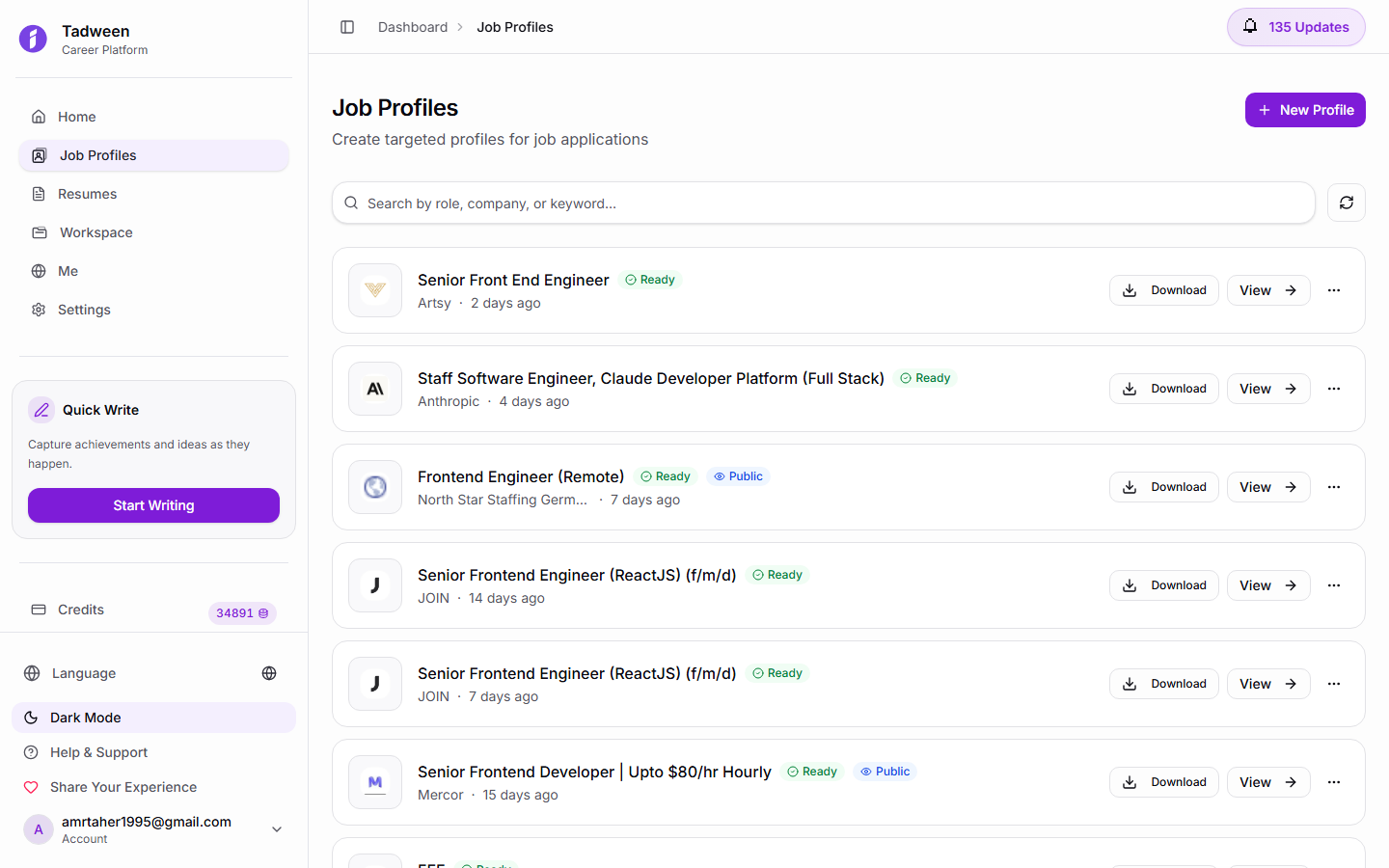
Multiple job profiles, each tailored to a different career direction, all managed in one place.
The practical effect: less anxiety, more options, and a professional presence that doesn't depend on any single interview outcome. When one door is slow to open, you're already knocking on others.
Start building your profiles with free credits. No credit card required.
The Bottom Line
Positive signs exist, and they're worth noticing. But the real move after an interview isn't reading tea leaves. It's sending the thank-you email, setting a one-week follow-up reminder, and then opening a new tab to start your next application. The best way to stop obsessing over one interview is to have more interviews ahead of you.
Stop Waiting. Start Building.
Create multiple tailored job profiles with AI-powered content, bilingual output, and a public portfolio. Reduce interview anxiety by expanding your pipeline.