
Canva Makes Beautiful Resumes. Tadween Makes Resumes That Get You Hired.
Canva is a brilliant design tool. But a resume is not a poster. Compare how Tadween's AI career intelligence stacks up against Canva's template-based approach for job seekers in the MENA region and beyond.
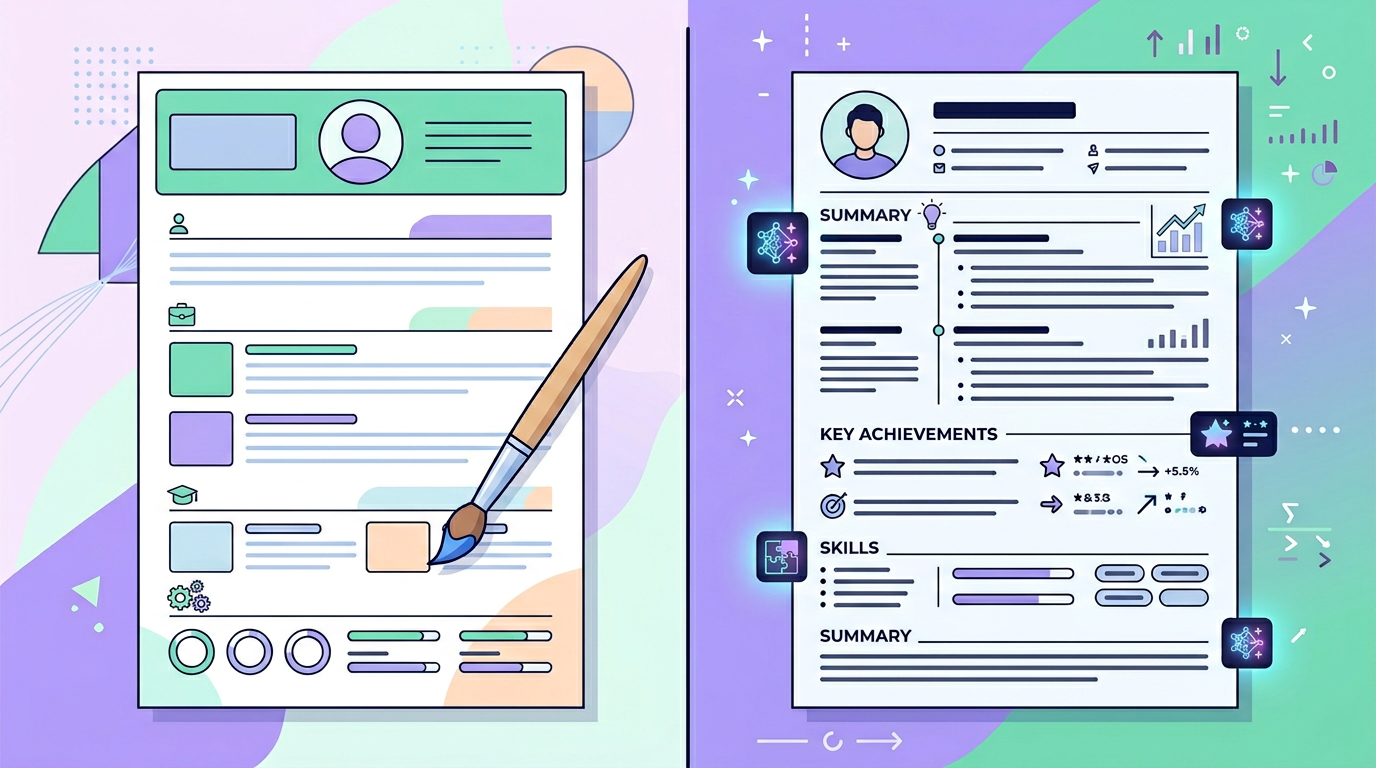
Two Very Different Tools for Two Very Different Problems
If you've ever built a resume in Canva, you know the appeal. You open a template, drag in some elements, pick a color palette, and twenty minutes later you have a document that looks like it belongs in a design portfolio. Canva has earned its reputation as the go-to tool for people who want professional-looking graphics without touching Adobe Creative Suite. Over 170 million people use it for everything from Instagram stories to pitch decks to wedding invitations.
Resumes, though, sit in an uncomfortable middle ground. They need to look professional, yes. But their primary job is not to impress a human eye scrolling through a feed. Their primary job is to pass through an Applicant Tracking System, land on a recruiter's desk, and communicate your career story in a way that matches a specific job opening. That is where the gap between a design tool and a career tool becomes impossible to ignore.
Tadween was built from the ground up as an AI-powered career management platform. It does not start with templates and colors. It starts with your career data: your roles, your achievements, your skills, the industries you've worked in, and the jobs you're targeting. Everything it produces, from resumes to cover letters to job profiles, is generated from that foundation. The difference is not cosmetic. It is structural.
The Core Problem: Canva Designs Documents, Tadween Builds Careers
Canva's resume builder is, at its heart, a graphic design canvas with resume-shaped templates. You choose a layout, then you type in your own content. Every word, every bullet point, every skill listed comes from you. The tool's contribution is visual: spacing, fonts, icons, and color schemes. If you already know exactly what to write and just need it to look polished, Canva delivers.
But most job seekers do not know exactly what to write. They stare at a blank bullet point field and wonder how to describe three years of project management in a way that resonates with a hiring manager at a tech startup versus a consulting firm. They are unsure which skills to highlight for a particular role. They reuse the same generic summary across every application because rewriting it each time feels overwhelming.
Tadween eliminates that blank-page problem entirely. Paste a job description into Tadween, and its AI analyzes the role against your stored career data. It generates tailored bullet points that pull from your real achievements. It suggests 8 to 12 skills matched to the job posting. It writes a professional summary that positions you for that specific opportunity. You review, edit, and approve, but you never start from zero.
A resume that looks stunning but says the wrong things is worse than a plain document that speaks directly to what the hiring manager needs.
ATS Compatibility: The Invisible Dealbreaker
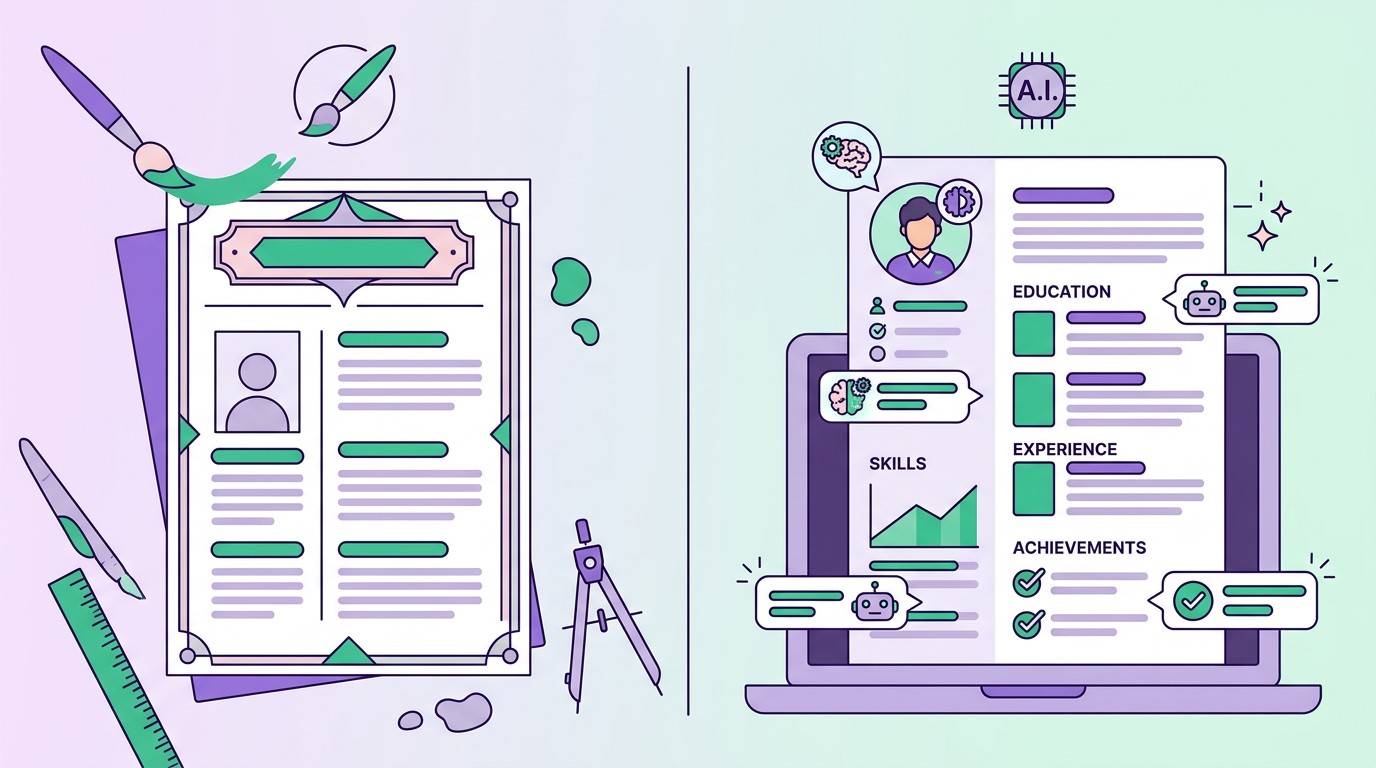
Here is a statistic that should concern every Canva resume user: the majority of mid-to-large companies in the MENA region and globally use Applicant Tracking Systems to filter resumes before a human ever sees them. These systems parse your document for structured text, keywords, section headers, and role-relevant content. They do not admire your color palette.
Canva templates are built for visual impact. Many use multi-column layouts, text boxes, icons embedded as images, custom fonts, and graphical skill bars. ATS parsers struggle with all of these. A two-column layout might get read as scrambled text. An icon-based skills section might be invisible entirely. Your carefully designed resume could score a zero in an ATS while looking perfect on screen.
Tadween generates resumes that are ATS-optimized by default. The output uses clean, parseable formatting. Section headers follow standard conventions that ATS systems recognize. Skills are listed as text, not graphics. The document structure prioritizes machine readability alongside human readability. You do not have to choose between looking professional and getting past the filter, because Tadween handles both.
Arabic and RTL Support: Not an Afterthought
For professionals in the Arabic-speaking world, language support is not a nice-to-have feature. It is essential. Many job seekers in the MENA region need resumes in both English and Arabic, sometimes for the same employer, sometimes for different markets entirely.
Canva does not offer native Arabic RTL resume templates. You can manually set text direction in some elements, but the templates themselves are designed for left-to-right languages. Building a proper Arabic resume in Canva means fighting the tool at every step: flipping layouts, adjusting alignment, dealing with mixed-direction text. The result often looks awkward because the template was never designed for RTL content.
Tadween was built bilingual from day one. Arabic content is not translated from English; it is culturally adapted. The bilingual profile system generates Arabic resumes with proper RTL layout, appropriate professional language conventions, and formatting that looks native to Arabic-speaking recruiters. Switch between English and Arabic versions of the same resume without rebuilding anything.
Career Intelligence vs. One-Off Documents
Perhaps the most fundamental difference is what happens after you create your first resume. In Canva, each resume is an isolated document. If you apply to a different role next week, you open a new template or duplicate the old one and start editing manually. There is no connection between your applications, no learning, no accumulated career data.
Tadween treats your resume as one output of a broader career management system. Your career workspace stores your complete professional history: every role, achievement, skill, and certification. When you create a new job profile or resume, the AI draws from this complete picture. Apply to a marketing director role on Monday and a product manager role on Wednesday, and each resume reflects the right emphasis without you re-entering information.
This approach also powers Tadween's other tools. Cover letters reference your actual achievements. Job fit analysis scores how well your profile matches a posting across multiple dimensions. Your public portfolio page at tadween.me stays current as your career evolves. Everything is connected because everything draws from the same source.
When Canva Resumes Actually Make Sense
This is not a one-sided argument. Canva excels in specific scenarios where visual design genuinely matters more than ATS optimization:
- Creative industry portfolios: If you're a graphic designer, illustrator, or art director, your resume is partly a design sample. Canva lets you showcase your aesthetic sensibility directly in the document.
- Personal branding materials: Networking events, conferences, and personal websites sometimes call for a visually distinctive one-pager that functions more as a leave-behind than a job application.
- Internal promotions: When you're sharing your resume with someone who already knows you, ATS parsing is irrelevant. A polished Canva design can make a strong impression in person.
- Freelance pitches: Sending a capabilities overview to a potential client is different from applying through an ATS. Visual polish matters; keyword optimization does not.
If your resume's primary destination is a human inbox or a physical desk rather than an ATS upload portal, Canva's design-first approach is genuinely useful. For everything else, especially applications to companies in the MENA region where ATS adoption is accelerating rapidly, career-first tooling like Tadween is the safer bet.
Pricing: Credits vs. Subscriptions
Canva operates on a freemium subscription model. The free tier gives access to basic templates, while Canva Pro unlocks premium templates, brand kits, and design features at a monthly or annual cost. You're paying for ongoing access to a design platform regardless of how many resumes you create.
Tadween uses a credit-based model with no subscriptions. You get free credits to start, no credit card required. Each AI-powered action (generating a resume, creating a cover letter, running a job fit analysis) costs credits. You buy more only when you need them. For job seekers who apply in bursts, this means paying for value delivered rather than maintaining a subscription during months when you're not actively looking.
Tadween vs Canva Resume Builder: Feature Comparison
A side-by-side look at what each tool offers job seekers
| Feature | Tadween | Canva Resume Builder |
|---|---|---|
| AI-generated resume content | ||
| ATS-optimized formatting | ||
| Tailored to specific job postings | ||
| Arabic RTL resume templates | ||
| Career data management | ||
| Visual design templates | Professional templates | 500+ creative templates |
| AI cover letter generation | ||
| Job fit analysis | ||
| Public portfolio page | ||
| Multi-career profile support | ||
| Drag-and-drop design editor | ||
| Custom graphics and icons | ||
| Pricing model | Pay-per-use credits | Free / $13/mo subscription |
| Bilingual EN/AR support | Native | Manual only |
Frequently Asked Questions
Can I use Canva and Tadween together?
Yes. Some professionals use Tadween to generate optimized resume content and job-matched bullet points, then use Canva for highly visual versions needed for creative portfolios or networking events. For ATS submissions, use Tadween's own output directly.
Are Canva resumes really bad for ATS?
Not all Canva templates fail ATS parsing, but many do. Templates with multi-column layouts, embedded graphics, custom fonts, and icon-based skill sections are particularly problematic. Simple single-column Canva templates fare better, but still lack the keyword optimization and structured formatting that Tadween provides automatically.
Does Tadween offer visual resume templates?
Tadween provides clean, professional resume templates designed to balance visual appeal with ATS compatibility. They are not as visually experimental as Canva's creative templates, but they look polished and are structured to perform well in both human review and automated screening.
How does Tadween handle Arabic resumes differently from Canva?
Tadween was built bilingual from the start. Arabic resumes use proper RTL layout, culturally appropriate professional language, and formatting conventions familiar to Arabic-speaking recruiters. Canva requires manual RTL adjustments on templates designed for English, often resulting in alignment issues and awkward formatting.
Is Tadween free to try?
Yes. Tadween gives you free credits when you sign up, no credit card required. You can generate your first AI-powered resume, cover letter, or job profile without paying anything. Additional credits are available on a pay-as-you-go basis.
Your Resume Should Work as Hard as You Do
Stop formatting documents and start building a career toolkit. Try Tadween free with no credit card, no subscription, and no blank pages to fill.