
Cover Letters in 2026: Still Relevant, and Here's How to Write One That Gets Interviews
60% of MENA recruiters still read cover letters. The ones that stand out share the same three-paragraph backbone and a human voice no AI-generated template can fake. Here's how to write yours.
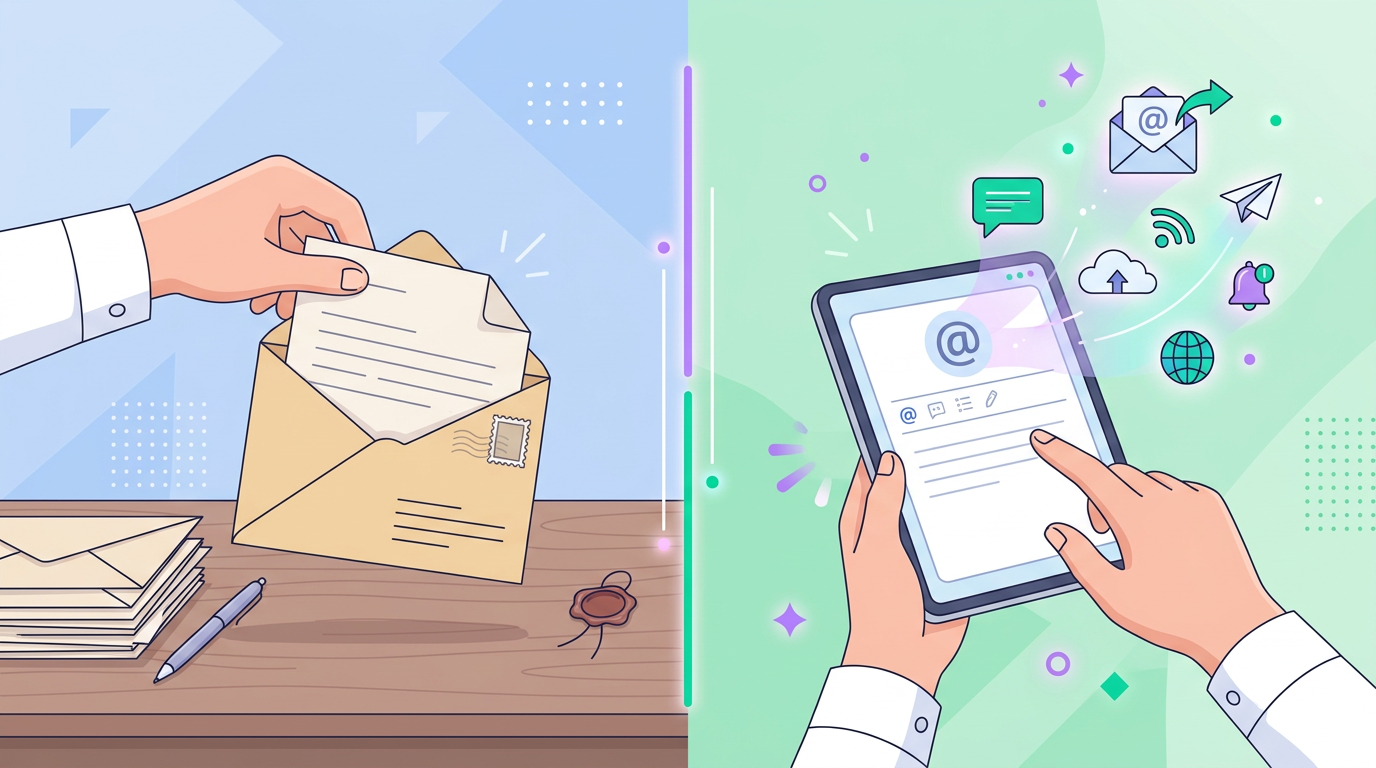
Are Cover Letters Still Worth It in 2026?
Every few years someone declares the cover letter dead. Every few years, hiring managers keep asking for them. A 2025 ResumeLab survey of 625 recruiters found that 60% still read cover letters when deciding who to interview, and 83% said a strong letter can land an interview even when the resume is weaker than other candidates. In MENA specifically, where hiring often blends formal GCC processes with relationship-driven culture, cover letters are doing more work than ever.
The confusion comes from the fact that half of applications now go through platforms where cover letters are optional or auto-parsed. So people assume the letter doesn't matter. It does. The letter is what tells the recruiter why this job instead of why me in general, and that's the single hardest thing to convey through a resume or a LinkedIn profile.
What a Cover Letter Does That a Resume Cannot
A resume is a list. A cover letter is a narrative. Those are different jobs. Your resume tells the recruiter what you did; your cover letter tells them why they should care, in the context of this role at this company right now. That narrative layer is what separates candidates who look qualified on paper from candidates who feel like the obvious hire.
Three specific things a cover letter can do that a resume structurally cannot:
- Connect dots the resume leaves implicit. A resume shows you were a product analyst then a project manager. A cover letter can explain that you chose to pivot because you wanted to own outcomes rather than just report on them — which is exactly what the target role requires.
- Address gaps or transitions proactively. A six-month gap, a career change, a move between industries, a relocation to the UAE — these read as red flags on a resume and as deliberate choices in a cover letter.
- Demonstrate written communication. For any role that involves writing emails, reports, proposals, or stakeholder comms (i.e. most knowledge-work roles), the cover letter is a live writing sample. Recruiters treat it that way whether they say so or not.
ATS-Optimized Cover Letter Format

Most MENA companies using modern ATS platforms (Workday, Taleo, SuccessFactors, Greenhouse) parse cover letters for keywords the same way they parse resumes. That doesn't mean stuffing your letter with jargon. It means making sure the letter is machine-readable first:
- Submit as a PDF or .docx, never a scanned image or JPEG
- Use standard fonts: Arial, Calibri, Times New Roman, 10.5–12pt
- Avoid tables, text boxes, headers, footers, and columns — ATS parsers mangle them
- Include your full name, phone, email, and city at the top as plain text
- Mirror 3–5 keywords from the job description naturally in the body (exact phrase matches matter)
- Keep it to one page, 250–400 words, three paragraphs
A cover letter that passes ATS is boring in format and exciting in content. That's the correct combination.
The 3-Paragraph Structure: Hook, Evidence, Ask
Forget the five-paragraph essay you wrote in school. A cover letter in 2026 has three paragraphs, and each one has a single job.
Paragraph 1: Hook
Your opening sentence decides whether the recruiter reads paragraph two. It has to accomplish three things: identify the role, signal why you're applying beyond "I need a job," and give one specific reason you're worth reading for.
The worst opening line, in any language, is: "I am writing to apply for the [role] position I saw on LinkedIn." The recruiter knows what you're applying for. They don't need you to narrate it back.
Paragraph 2: Evidence
This is where you earn the interview. Pick one or two specific accomplishments from your background that directly map to what the role requires. Not a laundry list. Not a restatement of your resume. One or two proof points with numbers, written in a way that shows you understand why those numbers matter to this particular employer.
Weak: "I managed social media and grew our following." Strong: "I grew our B2B LinkedIn following from 800 to 14,000 in 11 months by shifting from product posts to founder-led commentary — a pattern that fits how your team describes its own thought-leadership strategy in the job post."
Paragraph 3: Ask
End with a clear, confident close: reiterate interest in one sentence, make your availability concrete, and ask for the next step. Don't grovel. Don't apologize for applying. Don't say "I would love the opportunity to" twice.
Opening Hooks That Actually Work
Five opening patterns that consistently outperform generic openers, drawn from letters that landed interviews at MENA and international employers in the last 18 months:
- The specific observation: "Your Q4 launch in Saudi was the first time I've seen a fintech actually localize for Hijri calendar payroll cycles instead of retrofitting Gregorian — and it's the kind of product thinking I want to contribute to."
- The shared problem: "In my last role I spent 14 months fixing the exact operations bottleneck your head of supply chain described in his recent podcast."
- The relevant credential plus angle: "I'm a civil engineer who spent the last three years building BIM models for NEOM contractors — which is why your Senior BIM Coordinator role caught my attention."
- The honest transition: "After six years in audit at Big 4, I'm making a deliberate move into internal finance at a growing company. Your Finance Business Partner role is the exact transition I've been preparing for."
- The mutual connection (only if real): "Sarah Al-Mansouri on your growth team suggested I reach out about the Content Lead role after we worked together on the Careem rebrand in 2023."
Connecting Experience to the Company's Mission
Generic letters talk about you. Strong letters talk about the company — and then connect you to that. Before you write a word, spend 20 minutes reading: the company's most recent press release, the hiring manager's LinkedIn, the company's own blog or newsroom, any mention of the specific team in a recent podcast or conference talk.
You're looking for a point of genuine intersection: a strategic priority, a new market they're entering, a problem they've publicly said they want to solve. Your paragraph two then becomes: "You said X publicly. I spent the last Y doing the thing that addresses X. Here's the specific outcome." That's the only connection that moves a recruiter from "qualified" to "bring them in."
When to Skip the Cover Letter Entirely
Cover letters are not always net positive. Skip it when:
- The application explicitly says "do not include a cover letter" — some companies filter applicants who ignore this
- You're applying through a referral with a warm intro — a good referral email replaces the cover letter function
- You're using EasyApply-style quick applications for high-volume roles where the letter field isn't even surfaced to the hiring manager
- Your cover letter would be identical to your resume summary — in that case either rewrite the letter or skip it
Bad cover letters actively hurt. A generic three-paragraph block of platitudes is worse than no letter at all, because it signals you'll bring the same energy to the job.
Cover Letter vs Email Body: When to Use Each
If you're applying via a formal ATS, attach a PDF cover letter. If you're applying via direct email to a hiring manager or recruiter, the email body is the cover letter. Don't write a three-line email and attach a full formatted letter — recruiters rarely open attachments on first touch.
For email-body cover letters: shorter (150–250 words), no header block, no "Dear Hiring Manager" (use the person's first name if you know it), and always put your one strongest proof point in the first two sentences so it's visible in the preview pane.
Writing Bilingual Arabic Cover Letters
Arabic cover letters for MENA employers follow a different rhythm than English ones, and a literal translation reads as awkward at best and unprofessional at worst. Three structural differences to get right:
- Salutation is formal by default. Use "تحية طيبة وبعد،" or "السلام عليكم،" depending on the employer's tone. Address by title where possible.
- Opening signals respect before intent. Arabic professional writing conventionally acknowledges the recipient and institution before stating your purpose. One sentence of acknowledgment is appropriate — more than that reads as flowery.
- Evidence still needs to be specific. The single biggest mistake in Arabic cover letters is staying abstract. The same "one or two proof points with numbers" rule applies.
If you're applying to a GCC employer that operates in English (most multinationals, most tech startups, most of DIFC and ADGM), English is usually safer. If you're applying to a government entity, family business, or local media house, Arabic signals cultural fluency and is often expected. When in doubt, match the language of the job posting itself.
AI-Generated Cover Letter Pitfalls
By 2026, recruiters have read thousands of AI-generated cover letters and they can spot them in seconds. The tells are consistent: "I am writing to express my strong interest," "I am particularly drawn to," "delve into," "leverage my expertise," "align with the company's mission," and the dreaded "I am confident that my skills and experience make me a strong candidate."
AI is genuinely useful for drafting, structuring, and tightening cover letters. It is genuinely harmful when you paste the output directly. Three rules for using AI without sounding like AI:
- Feed it your story first. Don't ask it to write a cover letter from scratch; give it three bullet points about a specific project and ask it to turn those into one paragraph.
- Kill the stock phrases. Search-and-delete: "strong interest," "passionate," "proven track record," "dynamic," "leverage," "utilize," "delve."
- Add one specific detail the AI couldn't know. A conversation you had, a project deadline you remember, a sentence from the job post you're directly answering. That single human touch changes the entire voice.
Tadween's cover letter tools are built around this loop — you provide the substance, the AI handles the structure and polish, and the final document reads like you wrote it carefully, not like it was generated in 30 seconds.
Follow-Up Strategy After Submitting
The submit button is not the end of the process. A simple follow-up playbook that consistently moves applications forward:
- Day of application: Connect on LinkedIn with the hiring manager or a recruiter at the company, with a brief note mentioning you applied
- Day 5–7: If the ATS hasn't auto-rejected, send a short email to the recruiter: one sentence confirming interest, one sentence with a relevant update (a new certification, a relevant project), one sentence asking about timeline
- Day 14: If still no response, one last polite nudge — or move on without taking it personally
- After interview: Thank-you email within 24 hours, with one specific thing you'd add to what you discussed
More than 50% of hires in MENA come through some form of warm follow-up, referral, or pre-existing relationship. The cover letter gets you in the door. The follow-up gets you the interview.
Want help writing cover letters that actually get responses in 2026? Start free on Tadween and get bilingual EN/AR cover letter tools built specifically for MENA job markets. Also worth reading: the ATS resume guide, LinkedIn profile optimization, and networking in the MENA region.
Cover Letter FAQ
How long should a cover letter be in 2026?
250-400 words, one page maximum, three paragraphs. Recruiters spend under 60 seconds on a letter - anything longer is skimmed or skipped. If you can't make your case in 400 words, the case itself is the problem, not the word count.
Do I need a different cover letter for every application?
Yes, but not from scratch. Keep a master version with your strongest proof points, then rewrite the hook and tailor paragraph two for each role. The company name and job title appearing once doesn't count as customization - the recruiter can tell.
Should I write my cover letter in Arabic or English for MENA jobs?
Match the language of the job posting. If the posting is in English (most GCC multinationals, tech, finance), write in English. If it's in Arabic (government entities, family businesses, local media), write in Arabic. Bilingual candidates applying to bilingual roles can submit both.
Is it okay to use AI to write my cover letter?
Use AI for structure and editing, not for the core content. Feed it your specific experience and let it polish - don't let it invent stories or generate from a blank prompt. The phrases 'I am writing to express my strong interest' and 'leverage my expertise' are instant red flags.
What if I don't know the hiring manager's name?
Spend 10 minutes on LinkedIn - you can find it 80% of the time. If you genuinely can't, use 'Dear Hiring Team' or 'Dear [Company Name] Recruiting Team'. Never use 'To Whom It May Concern' - it signals zero effort.
Should I include salary expectations in the cover letter?
Only if explicitly asked. If the posting says 'include salary expectations,' give a range based on market research. Otherwise, leave it out - it's a conversation for the recruiter screen, not the first impression.
Write Cover Letters That Actually Get Responses
Bilingual EN/AR cover letter tools built for MENA professionals. ATS-optimized, role-tailored, and always sounds like you - not like AI. Start with free credits.