
Beyond Wasta: How to Build a Real Career Network in the Middle East
Wasta gets blamed for everything wrong with hiring in the region. But the real question isn't whether connections matter. It's whether you're building the right kind.

Let's Talk About Wasta Honestly
Every conversation about careers in the Middle East eventually arrives at the same word: wasta. Ask a frustrated job seeker in Riyadh why they didn't get the role, and they'll say wasta. Ask a fresh graduate in Cairo why their classmate got hired first, and they'll say wasta. Ask an expat in Dubai why the promotion went to someone less qualified, and they'll lower their voice and say wasta.
The word carries weight. It implies that merit doesn't matter, that connections override competence, that the system is rigged against anyone who doesn't have the right last name or the right uncle in the right office. And sometimes, that's exactly what it means.
But here's what rarely gets said: wasta, at its core, is a network effect. It's a trust system. And like any system built on trust and connections, it exists on a spectrum. At one end sits nepotism and corruption. At the other sits something remarkably similar to what Western business culture celebrates as networking, referrals, and social capital.
The difference isn't the mechanism. It's whether the trust was earned or inherited.
The Wasta Spectrum: From Nepotism to Earned Trust
Let's map this out honestly. Wasta operates on a spectrum that most people collapse into a single negative concept:
Harmful wasta is when someone gets a position they're unqualified for because of family connections. A minister's nephew becomes a department head with no experience. A contractor wins a government bid because of tribal affiliations rather than capability. This is the wasta that damages organizations and economies. It's real, it's destructive, and it deserves every criticism it gets.
Neutral wasta is when connections open a door that talent then walks through. Your former manager recommends you for a role because they've seen your work. A colleague introduces you to a hiring manager because they genuinely believe you'd be a good fit. The connection creates access, but competence still determines the outcome.
Positive wasta is earned professional reputation. When a senior leader in your industry mentions your name in a conversation about a new initiative, not because you're related but because your work speaks for itself. This is what LinkedIn influencers call "personal branding" and what recruiters call "a strong referral."
The goal isn't to eliminate wasta from your career strategy. It's to shift from inherited wasta to earned wasta, from connections based on who your family is to connections based on what your work demonstrates.

Wasta exists on a spectrum. The goal is to build the kind based on competence, not lineage.
How Wasta Maps to Western Networking
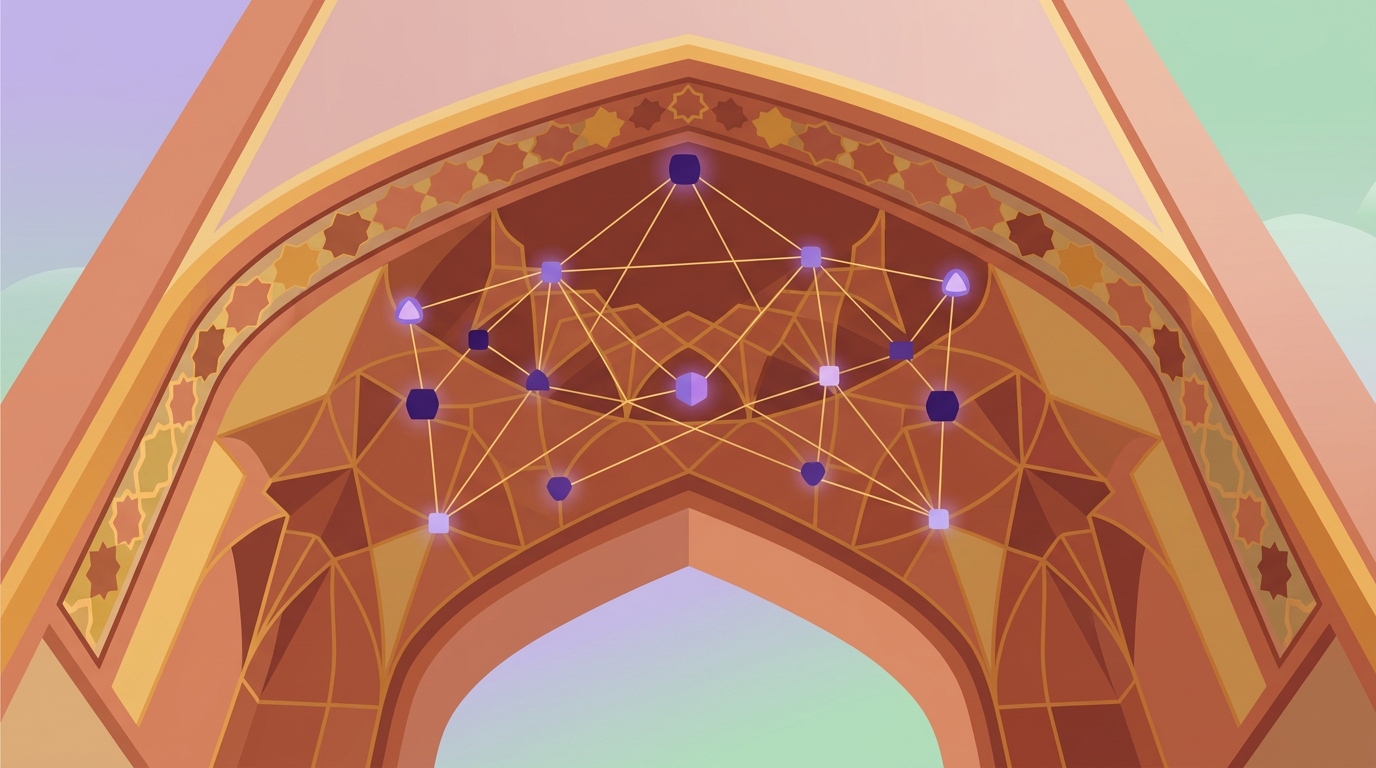
Here's an uncomfortable truth that Western professionals working in the MENA region rarely acknowledge: the networking practices they consider normal are functionally identical to moderate wasta.
When a Stanford MBA refers their former classmate for a McKinsey position, that's networking. When an Emirati refers their cousin who happens to be genuinely qualified, that's wasta. The mechanism is identical: someone with credibility vouches for someone they know. The cultural framing is different, but the professional dynamics are the same.
Consider the parallels:
- Alumni networks at elite Western universities function exactly like tribal or family networks in the Gulf: they create preferential access based on shared identity
- LinkedIn recommendations are digital wasta: public endorsements from people who know your work, lending their credibility to your candidacy
- Executive referral programs at multinational companies formalize what wasta does informally: trusted people vouching for candidates they know
- "Culture fit" interviews often test the same social alignment that wasta networks provide: will this person integrate well with the existing team?
This isn't to excuse harmful nepotism. It's to recognize that relationship-based career advancement isn't a Middle Eastern problem to be solved. It's a human pattern to be navigated skillfully.
Building Earned Wasta: A Practical Framework
If inherited wasta comes from who your family is, earned wasta comes from what people know about your capabilities. Here's how to build it deliberately:
1. Document Everything You Do
The foundation of earned wasta is evidence. When someone recommends you for a role, they're staking their reputation on your competence. Give them material to work with. Keep a running record of your projects, outcomes, and impact. Not a vague resume. Specific, quantified evidence of what you've contributed.
This is where a platform like Tadween becomes practical. Your career profile captures the full context of your work: what you did, what changed because of it, and the skills you demonstrated. When someone asks "who do you know who could handle this?" and your name comes up, the recommender has substance to point to.
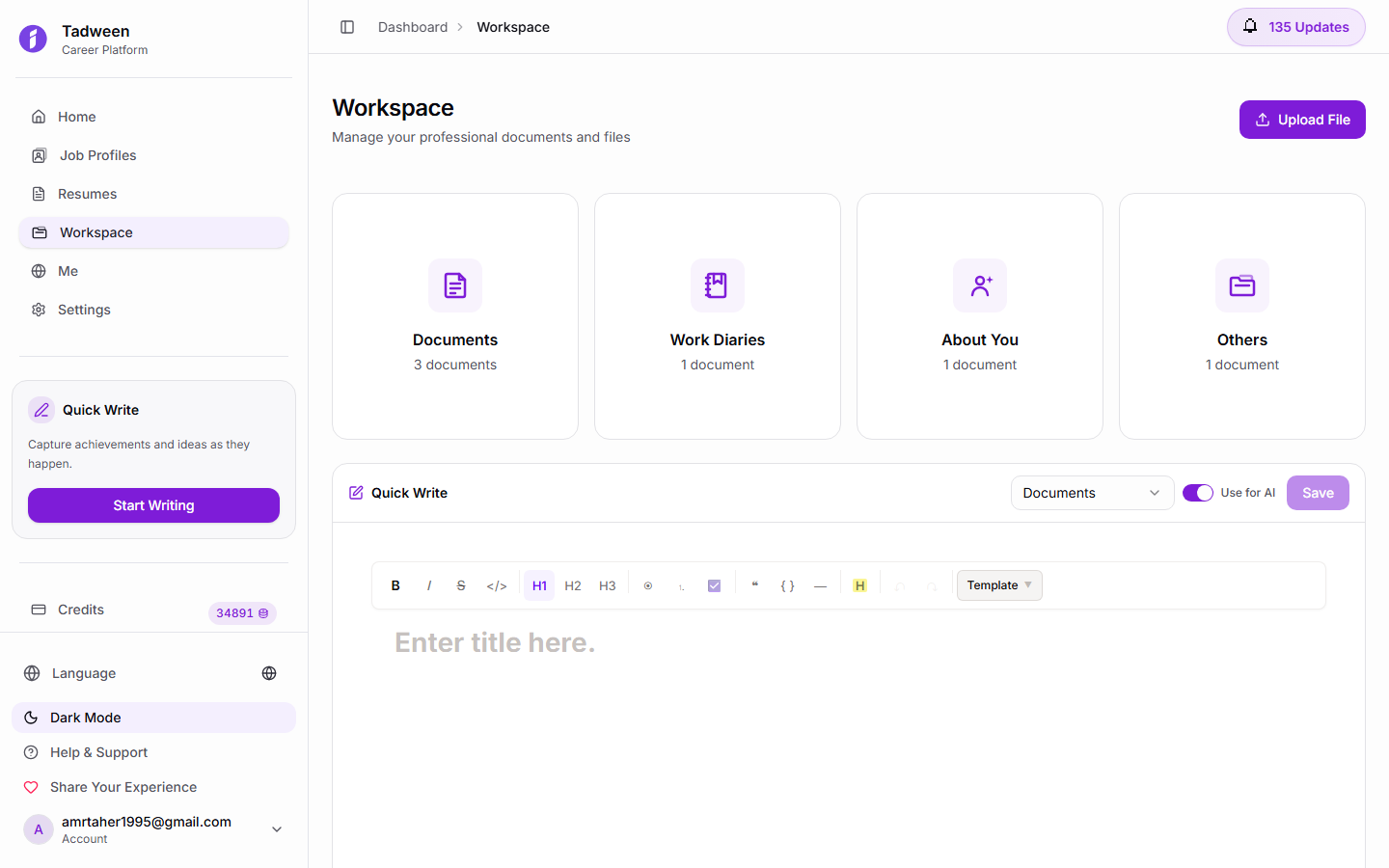
Tadween's workspace lets you document achievements as they happen, building the evidence base that turns connections into credible referrals.
2. Be Visible in Your Industry
In MENA markets, industry visibility carries outsized weight. The professional community is smaller and more interconnected than in larger Western markets. A reputation built in one Gulf country travels to the others. Strategies that work:
- Speak at industry events. The Gulf's conference circuit (GITEX, LEAP, Arab Health, ArabNet) creates concentrated networking opportunities. Presenting positions you as a contributor, not just an attendee
- Write in Arabic and English. LinkedIn content in Arabic reaches an underserved professional audience. Most MENA professionals consume English content but engage more deeply with Arabic. Post in both
- Join professional associations. Bodies like the Saudi Engineers Council, UAE Society of Engineers, or Egypt's professional syndicates create structured networking beyond social circles
- Mentor visibly. Helping junior professionals in your field builds loyalty-based connections that compound over years
3. Give Before You Ask
The strongest form of wasta is reciprocal. Before you need a connection to help you, be the person who helps others. Share job openings with your network. Make introductions between people who should know each other. Offer your expertise when someone in your industry asks a question publicly. In Arab culture, generosity builds obligation. In professional culture, it builds reputation. Both work in your favor.
4. Cross-Pollinate Your Networks
Most professionals in the MENA region operate in siloed networks: family, university friends, current colleagues. The professionals who build the strongest earned wasta are those who bridge between networks. If you're an Egyptian working in the UAE, you're a bridge between two professional ecosystems. If you're in tech but have connections in finance, you're a bridge between industries. Bridges are valuable because they connect otherwise disconnected pools of opportunity.
Gulf-Specific: Networking Under Nationalization
Saudization, Emiratization, Omanization, and similar nationalization programs have fundamentally changed the networking calculus in the Gulf. Here's what you need to understand:
For nationals: Nationalization programs create structural advantages, but they also create pressure. Being hired to fill a quota is the opposite of earned wasta. It's a starting position, not an end state. The nationals who build the strongest careers use the initial access that nationalization provides, then build genuine professional reputations that would sustain their careers without the policy. Document your contributions. Build skills that would be valued anywhere. The policy gives you the door; your competence keeps you in the room.
For expats: Your value proposition has shifted. In the pre-nationalization Gulf, expats competed primarily with other expats. Now you're competing within a framework that explicitly prioritizes nationals. This means your networking strategy must emphasize what you uniquely bring: specialized expertise, international connections, cross-cultural capabilities, and the kind of documented competence that makes you indispensable regardless of nationality quotas.
Practical networking moves for expats in the Gulf:
- Build relationships with national colleagues, not around them. The expats who thrive are those who help nationals develop, creating loyalty that transcends policy
- Document transferable expertise. If your role gets nationalized, a comprehensive career portfolio showing your unique capabilities opens doors at companies where your specialization is still in demand
- Network internationally from the Gulf. The UAE and Saudi Arabia are global hubs. Use your time there to build connections that extend beyond the region
- Position yourself as a knowledge bridge. Companies implementing nationalization need people who can transfer knowledge effectively. Make that your visible skill
Egypt and the Levant: The Remote Work Network Effect
While Gulf networking is shaped by nationalization, Egypt, Jordan, and Lebanon are experiencing a different shift: the remote work boom. Egyptian developers, Jordanian designers, and Lebanese marketers are increasingly working for international companies while living in the region.
This creates a unique networking dynamic:
Local reputation meets global reach. A developer in Cairo who contributes to open-source projects visible to Silicon Valley companies builds international wasta without leaving Egypt. A marketer in Amman who publishes case studies on LinkedIn reaches hiring managers in Dubai, London, and Toronto simultaneously.
The diaspora network is underutilized. Millions of MENA professionals work abroad. They're potential bridges to international opportunities, and most people never reach out to them strategically. A warm introduction from an Egyptian working at Google in Dublin is more powerful than 50 cold applications to European tech companies.
Freelancing builds portable wasta. Platforms like Upwork and Toptal create reputation that crosses borders. A freelancer with 50 five-star reviews from international clients has a form of earned wasta that no traditional network can match. That track record, when documented properly, becomes leverage for full-time opportunities.
For professionals in Egypt and the Levant, the strategy is clear: build your local network for regional opportunities, build your online presence for international ones, and use platforms that document your professional brand across both.
LinkedIn in Arabic: The Untapped Advantage
LinkedIn has over 10 million users in the MENA region, but Arabic-language professional content remains dramatically underrepresented. Most professionals in the region scroll English content passively but would engage more actively with Arabic content that speaks to their professional reality.
This is an opportunity. While English-language LinkedIn is saturated with recycled career advice, Arabic professional content faces minimal competition. A thoughtful post about your industry in Arabic reaches an audience that is hungry for relevant, culturally grounded insights.
What works on Arabic LinkedIn:
- Industry analysis grounded in regional context. Don't translate Western trends. Analyze what's happening in your sector within MENA specifically
- Career stories that reflect regional realities. The challenges of building a career in the Gulf as an expat, navigating family expectations around career choices, managing multiple professional identities
- Practical how-to content. Guides written for the specific tools, platforms, and processes used in MENA workplaces
- Commentary on regional policies. Thoughtful analysis of Vision 2030, Emiratization, Egypt's digital economy push, or Jordan's tech startup scene positions you as a sector expert
Post consistently in Arabic for three months. You'll be surprised how quickly you become a recognized voice in a space where most professionals are still silent.
Career Documentation: The Great Wasta Equalizer
Here's the uncomfortable reality: if your career advancement depends entirely on who knows you, you're always one degree of separation away from irrelevance. The person who vouched for you leaves the company. The family connection retires. The colleague who would have recommended you moves to a different industry.
Career documentation is insurance against network disruption. When your achievements, skills, and professional trajectory are captured in a comprehensive career profile, you're not dependent on any single person's memory or goodwill to communicate your value.
This matters especially in the MENA region, where:
- Job markets shift quickly. Oil price fluctuations, nationalization policy changes, and geopolitical events can reshape hiring priorities overnight
- Expat mobility is high. Your network in Dubai means less if you relocate to Riyadh. Documented credentials travel with you
- Multi-career paths are common. A portfolio career spanning consulting, freelancing, and employment needs documentation that captures all threads
- Performance review cultures vary wildly. Not every employer documents your contributions. If you don't do it yourself, those achievements disappear when you leave
Build your network. Invest in relationships. But also build a professional record that speaks for itself when your connections can't speak for you. That's what transforms wasta from a dependency into a complement.
The best career insurance isn't knowing the right people. It's being the person that right people want to know, and having the documented evidence to back it up.
FAQ
Is wasta the same as corruption?
No. Wasta exists on a spectrum. At one extreme, it's nepotism: unqualified people getting positions through family connections. At the other, it's earned professional reputation: people recommending you because they've seen your work. Most wasta falls somewhere in between. The goal isn't to avoid wasta but to build the earned kind based on competence rather than lineage.
How do expats build professional networks in the Gulf?
Focus on what makes you uniquely valuable: specialized expertise, cross-cultural capabilities, and international connections. Build genuine relationships with national colleagues. Attend industry events and speak when possible. Document your expertise so thoroughly that your professional record speaks even when your network can't. And use your time in the Gulf to build connections that extend beyond the region.
Does networking in Arabic on LinkedIn actually work?
Yes, and it works disproportionately well because the space is underserved. LinkedIn has over 10 million MENA users but Arabic professional content is scarce. Posting thoughtful industry analysis in Arabic faces minimal competition compared to English content. Three months of consistent Arabic posting can establish you as a recognized voice in your sector.
How does Tadween help with career networking in the MENA region?
Tadween is a bilingual career management platform built for MENA professionals. It helps you document achievements, build comprehensive career profiles, and generate tailored resumes and cover letters from your full professional context. When someone in your network recommends you, Tadween gives them substance to point to. Free credits to start, English and Arabic, no subscription required.
What's the best networking strategy for someone new to the Gulf job market?
Start by mapping the landscape: identify the key industry events, professional associations, and online communities in your sector. Attend GITEX, LEAP, or sector-specific conferences. Post on LinkedIn in both languages. Offer value before asking for it: share insights, make introductions, mentor junior professionals. And document everything you do professionally so that when connections form, you have evidence to back up your reputation.
Your Network Is Stronger When Your Work Speaks for Itself
Build a comprehensive career profile that captures your full professional story. When someone recommends you, give them evidence to point to. Bilingual, AI-powered, free credits to start.